

GEORGIA.
When I said I was going to Tbilisi in Georgia (the country, not the State of Georgia in the USA), I got this response:
You are going “WHERE?”
Followed by: “WHY”.…………and a few more exclamations, mostly unfavorable. One of the best knee-jerk reactions came from my daughter Gabe: “Don’t you think you’re being reckless?” while Lisa, her sister, stared at me in disbelief as she took in what I had just said, and remained silent, with a stoic expression on her face.

For many years, I have dreamed of visiting Georgia. However, the dream had escaped me until one day earlier this year, when I received a notification from Focused Escapes, a tour company that offers small group tours in niche markets. They were offering a nine-day tour of Georgia. How could I not respond?
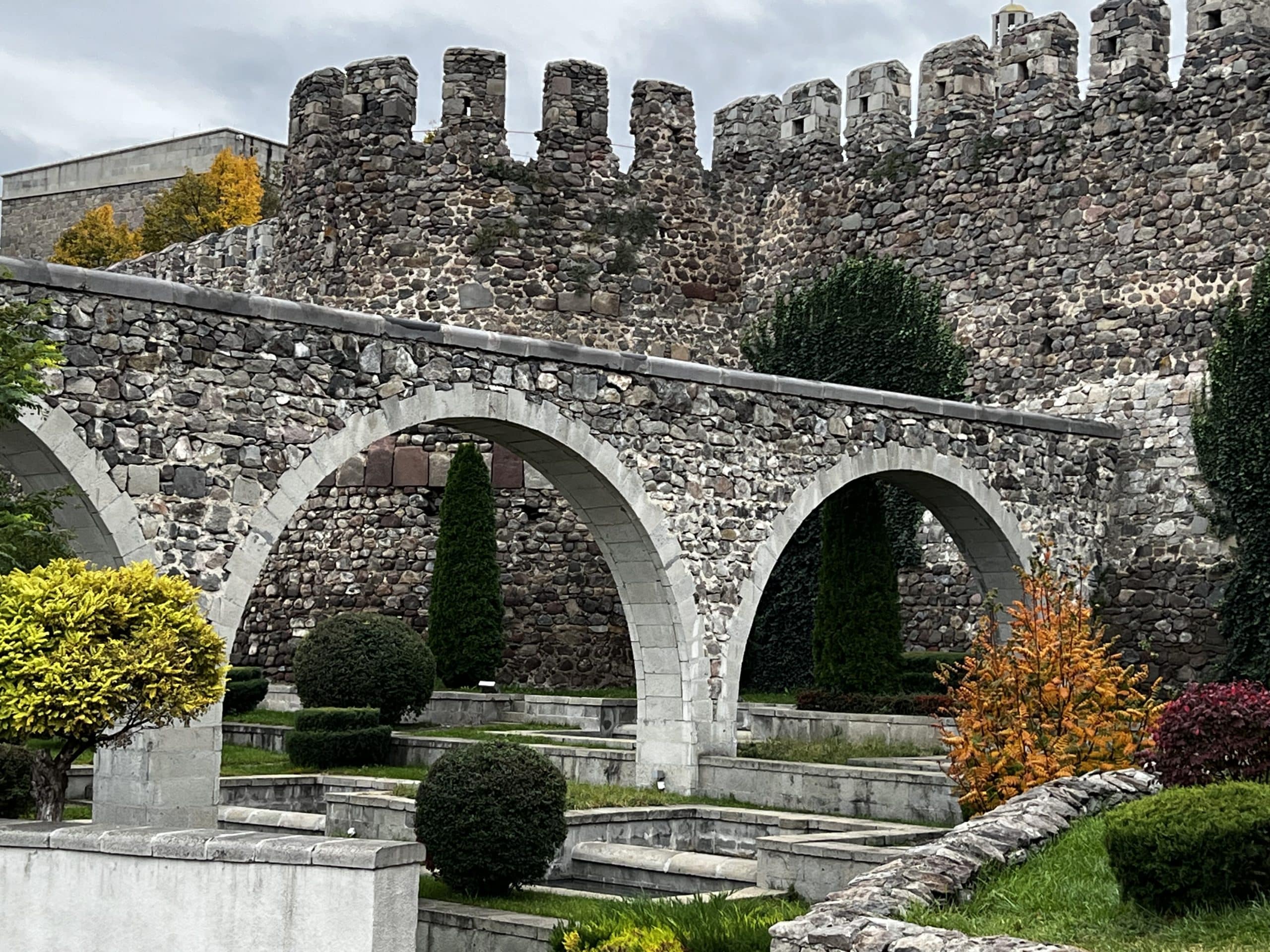
I cannot remember the last time I traveled with a tour group, but looking at the detailed itinerary, I recognized that this was ” done-for-you trip planning,” which would save me a lot of time and angst. Furthermore, reading the descriptions, I knew I would sleep in better accommodation, eat better food, and see more of the country than if I were to plan my own itinerary. This proved true.

The tour organizers would have the responsibility of where we would sleep, where we would eat (and did we ever!) and take on the task of getting us around — which happened to have been in a Mercedes Benz mini-bus. that was spacious and comfortable, with adjustable seats and excellent visibility.

And we would have our dedicated Georgian guide, Tsotne, accompany us all the way! Tsotne was amazing, a font of information, and a brilliant Tamada (toastmaster). The tour was to be led by Lori Appelling–Allen. I met Lori a few years back and knew she had been leading successful small group tours overseas for several years with a loyal following of travelers and photographers – because photographers are encouraged to join Focused Escapes tours
Now a food, wine, and culture tour of Georgia was beckoning, and all l had to do was add my name to the list
There was not much to think about. I signed up — and did not run it by Gabe or her sister Lisa for their approval or admonishment.
So why go to Georgia? And the obvious response is: WHY NOT!

MY GEORGIAN ODYSSEY.
I was in Georgia for sixteen days, nine of which were spent touring with Focused Escapes, and the rest in Tbilisi, the Capital city, on my own. I am not presenting myself as an expert because I only got a sampling of Georgia. Sixteen days was not enough and I would love to return and continue my Georgian odyssey.
The following are some snippets of my journey:
LOCATION.
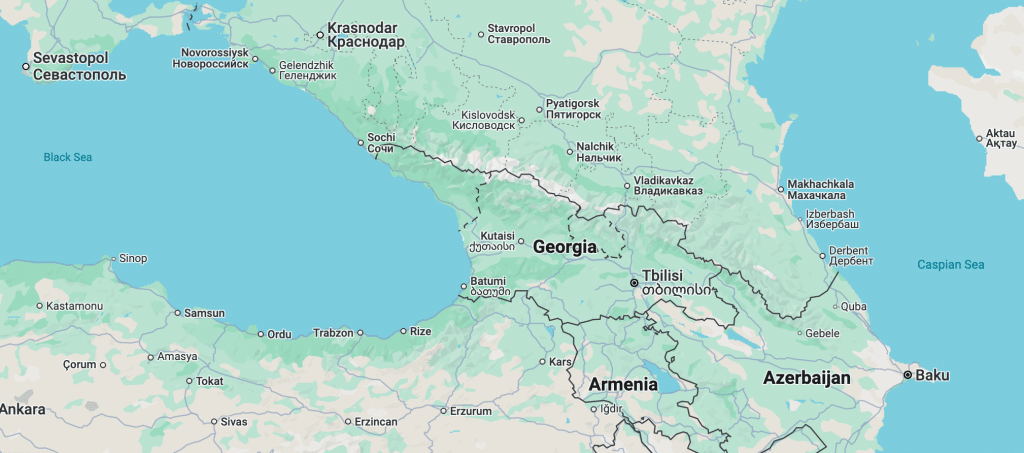
Georgia is located in the mountainous Caucasus region at the intersection of Eastern Europe and Western Asia. It is bordered by Russia, Armenia, Azerbaijan, Turkey, and the Black Sea. I find the names of those countries intriguing, even though they are not my usual stomping grounds.

TBILISI.
Tbilisi, the Capital of Georgia, was founded in 458 AD and was a vital stop on the Old Silk Road, a network of trade routes transporting silk and spices that connected the East with the West.
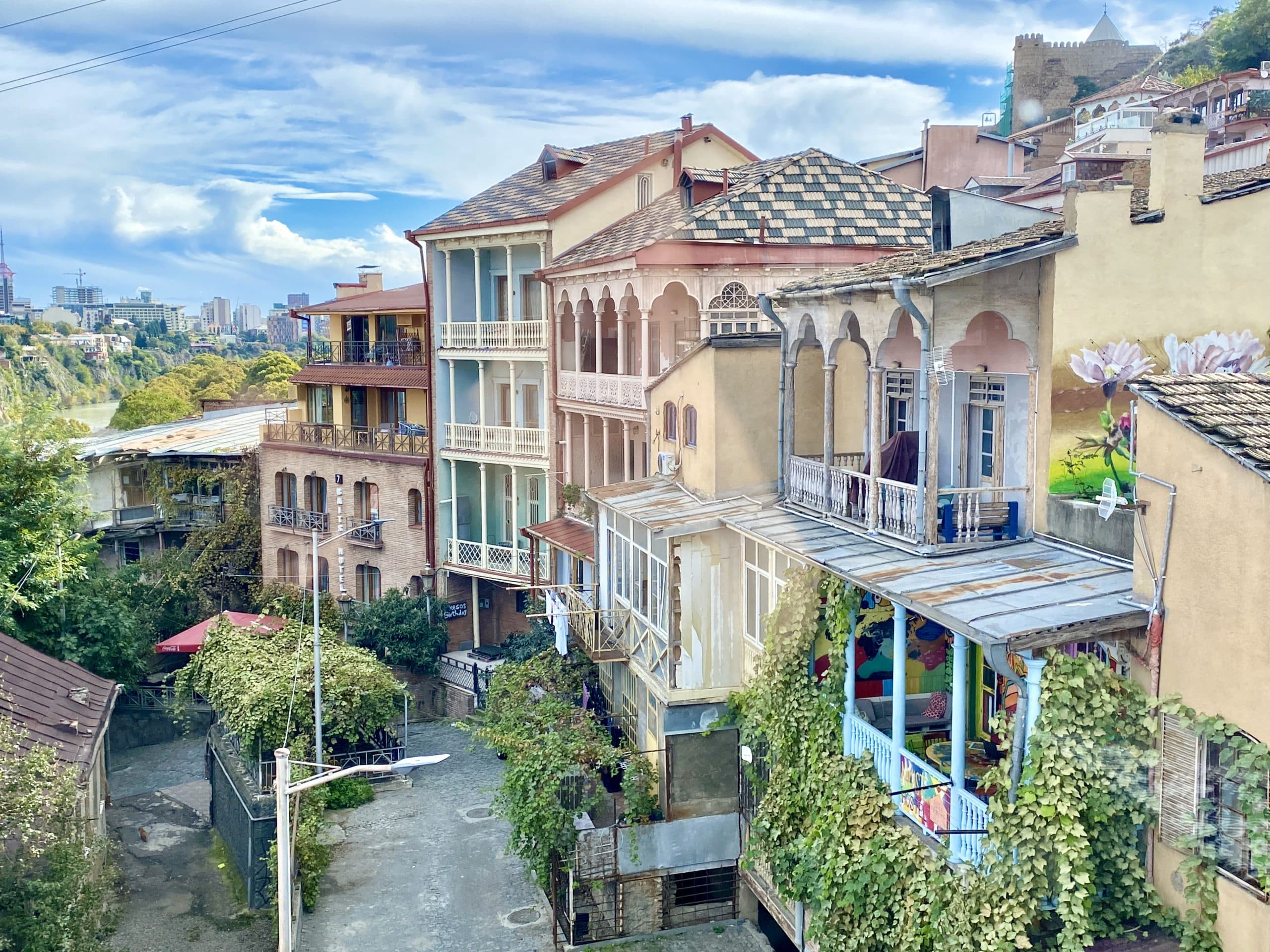
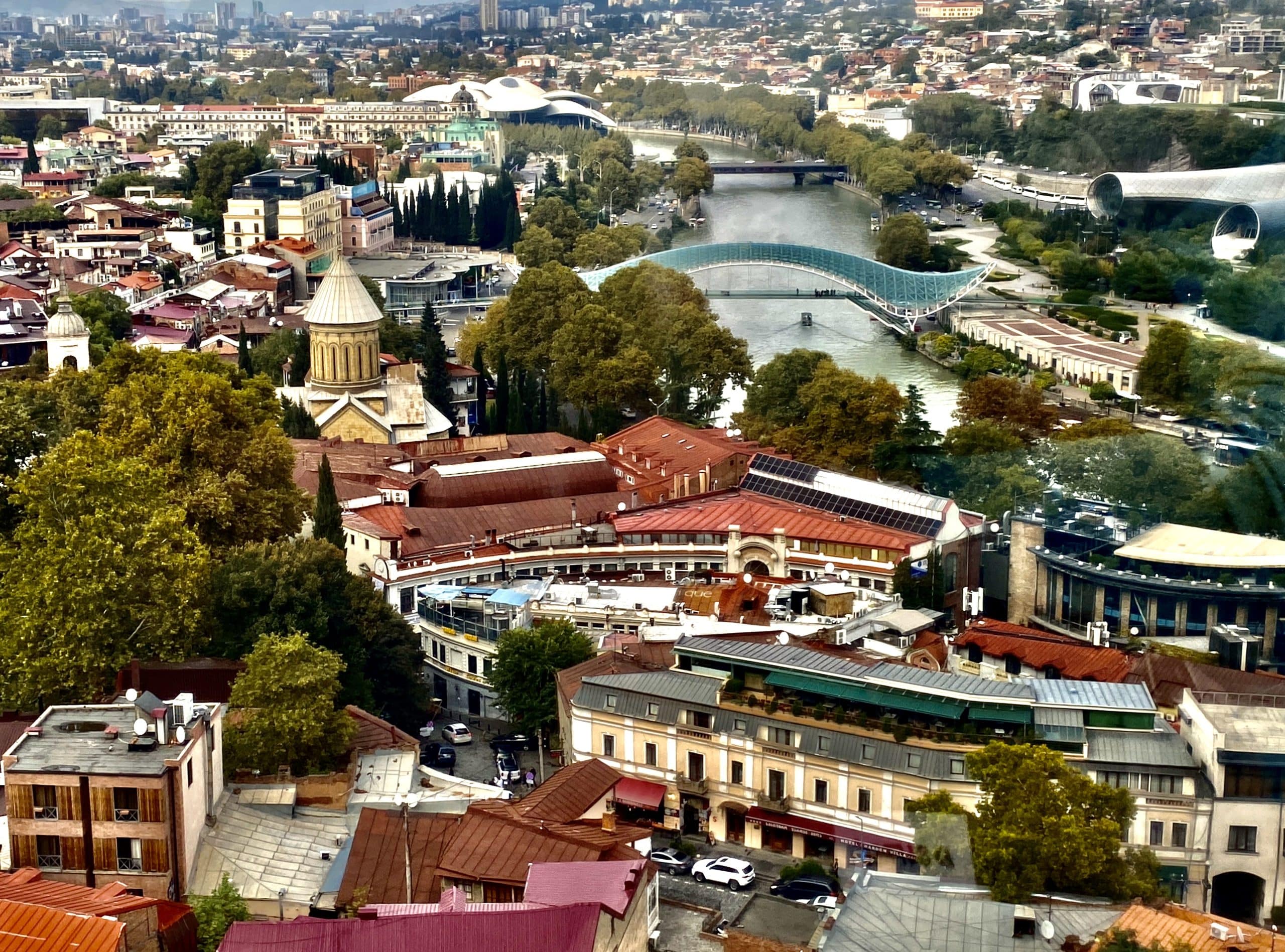
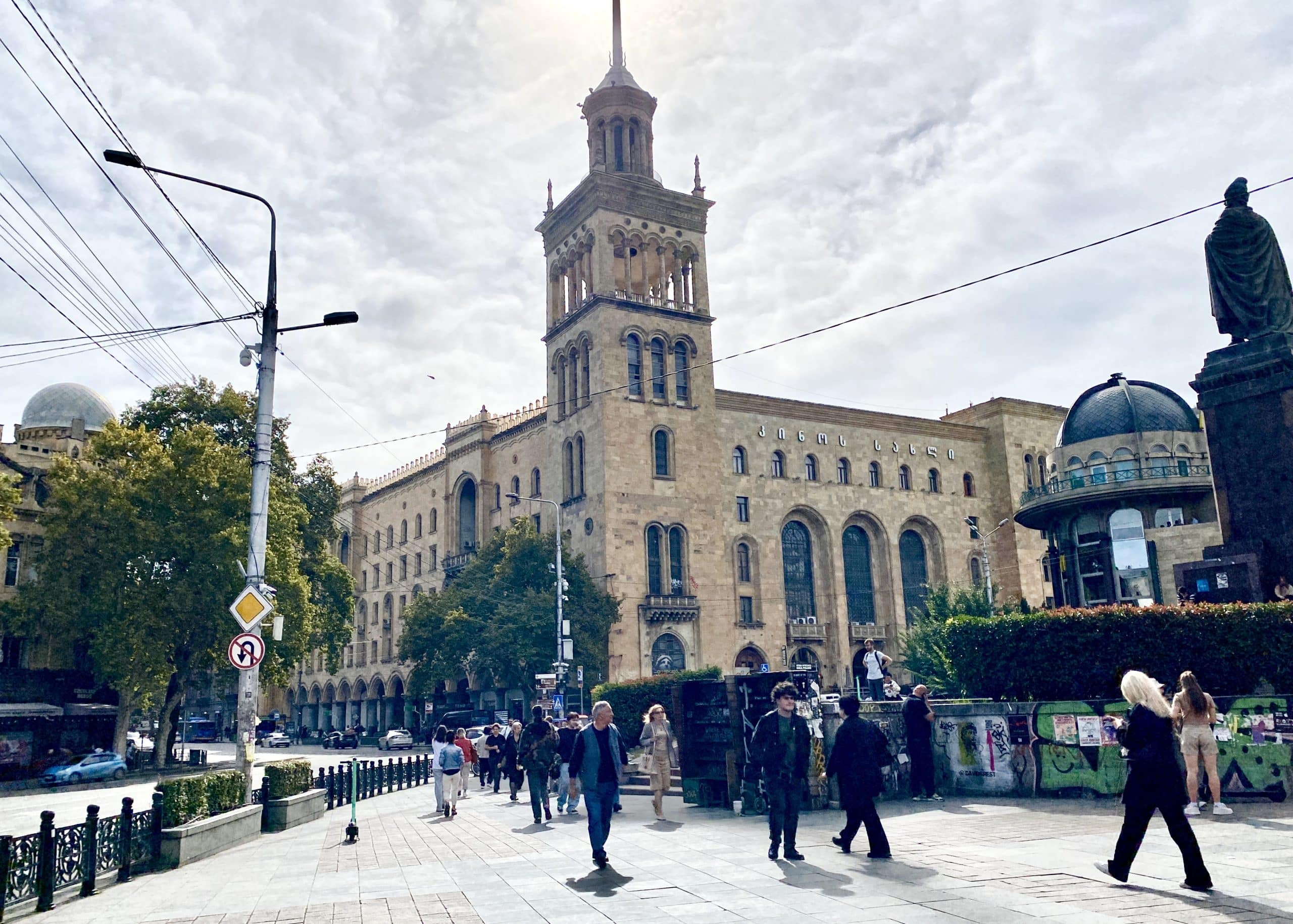
I found Tbilisi to be one of the most unique and interesting cities I have experienced. I was astonished by its beauty. It is set in a valley surrounded by hillsides, flanked by a collection of architecture that dates from different eras of Georgia’s long and complicated history.
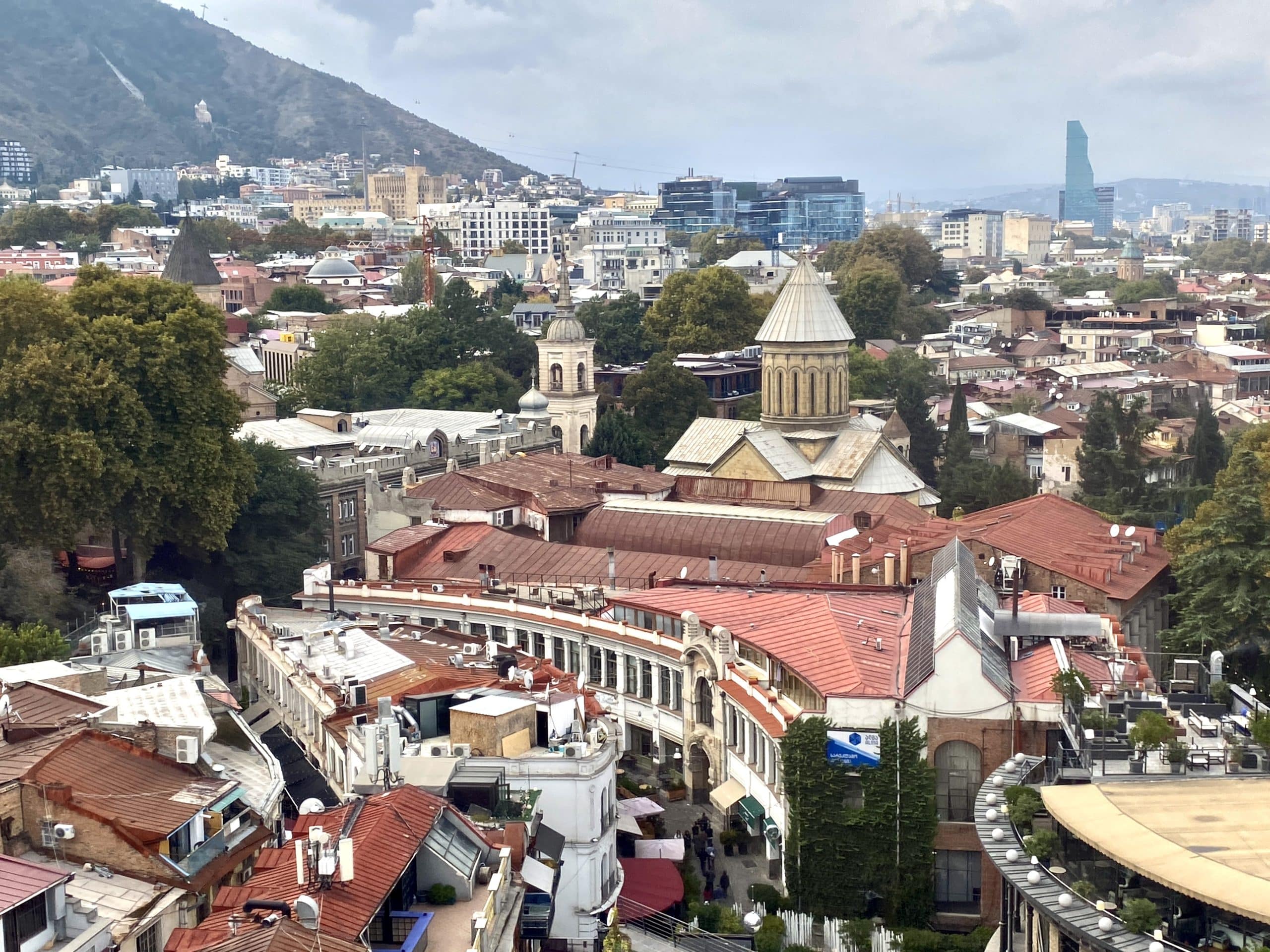
It is an ever-changing kaleidoscope of jaw-dropping views. The natural colors of the buildings, from muted gray tones to a golden honey palette in the downtown area, and stark white and pastel colors with intricate balconies in the older neighborhoods, contrast harmoniously.
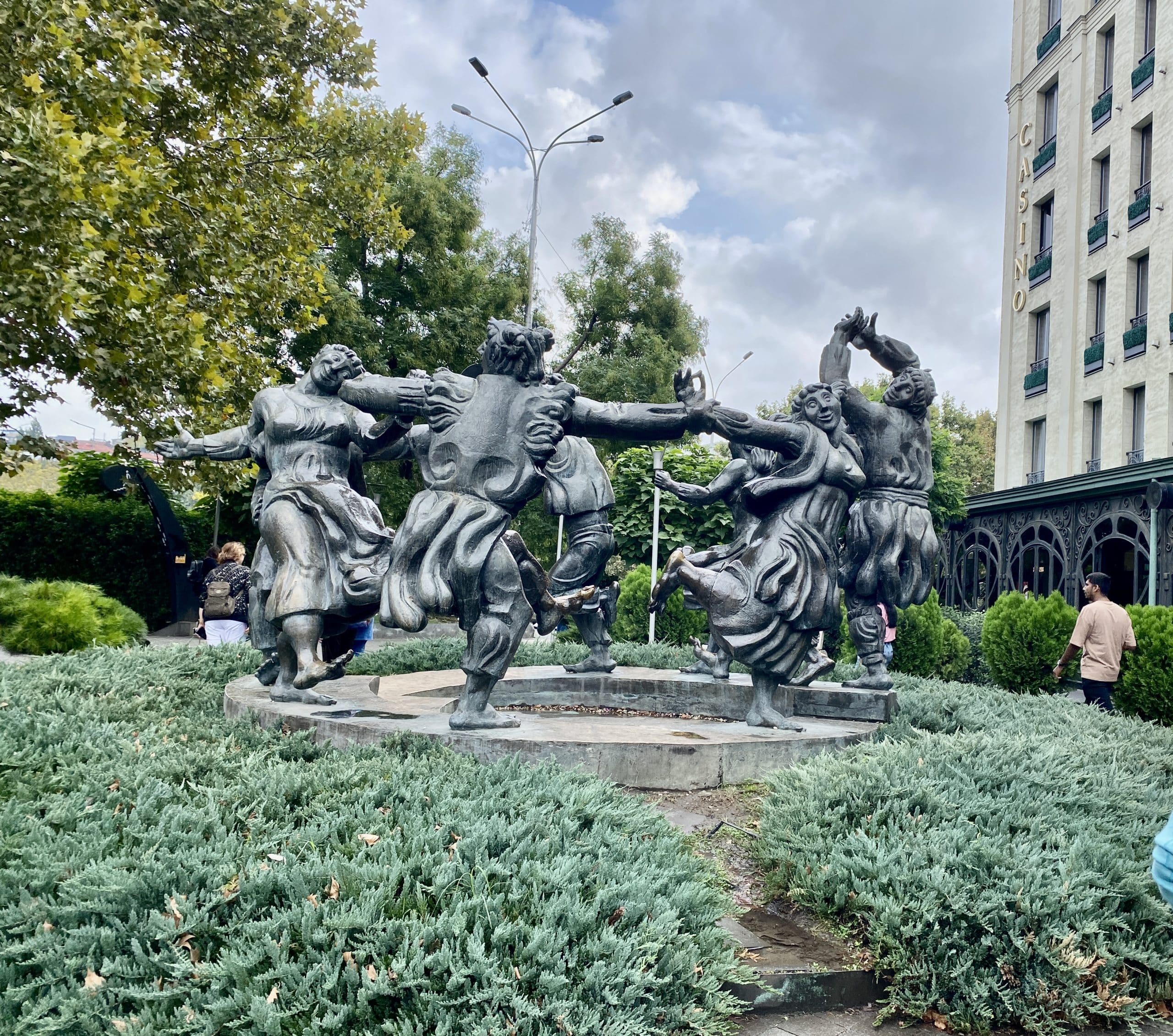
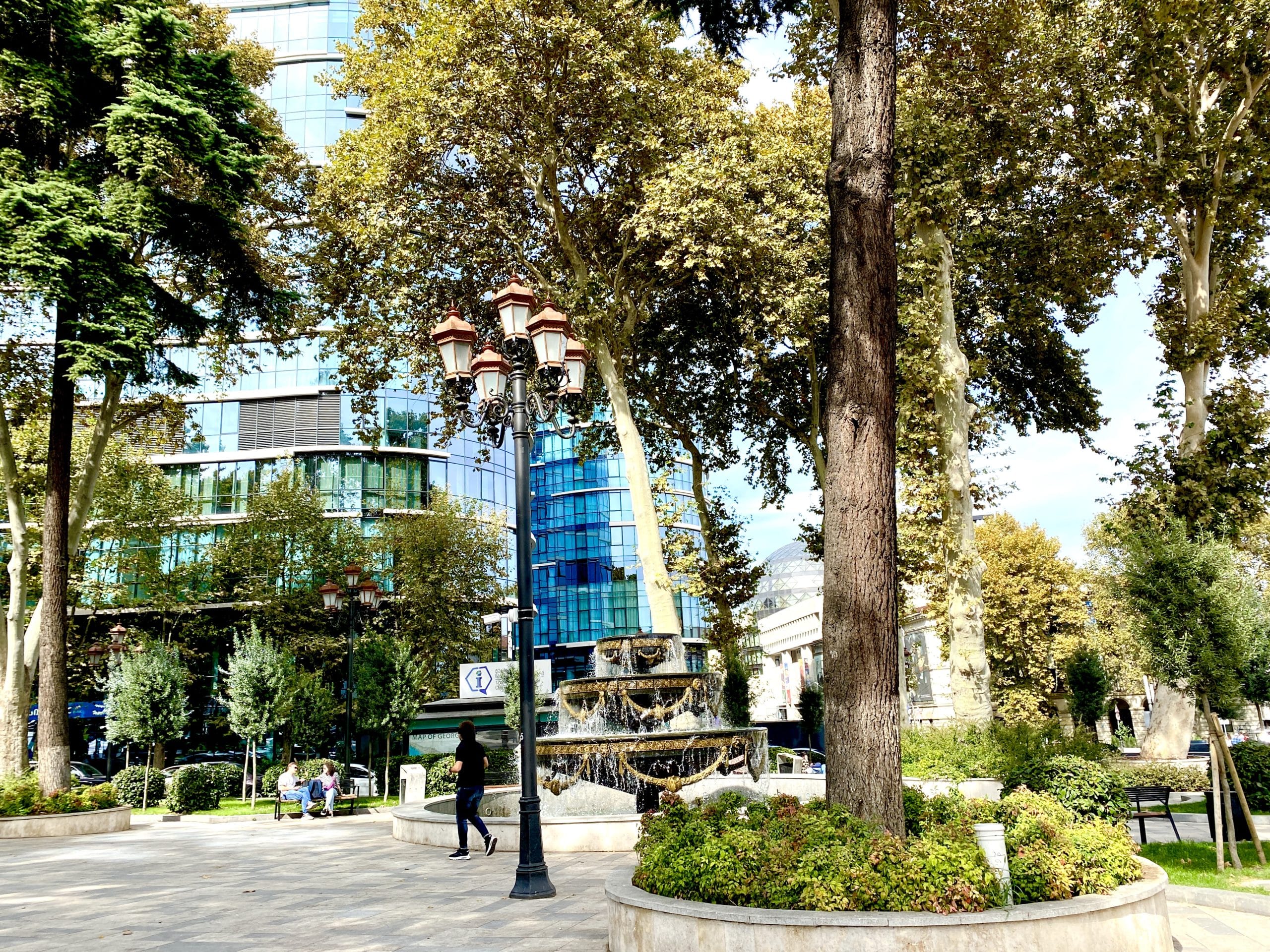
The neighborhoods are dotted with green spaces, including several small parks featuring sculptures. Tall, elegant trees add touches of green.

It is a city in transition, claiming its share of attention, having emerged from the Soviet shadow and is now becoming better known in the West. Buildings have been restored and are in good condition. Sidewalks are level and walkable.
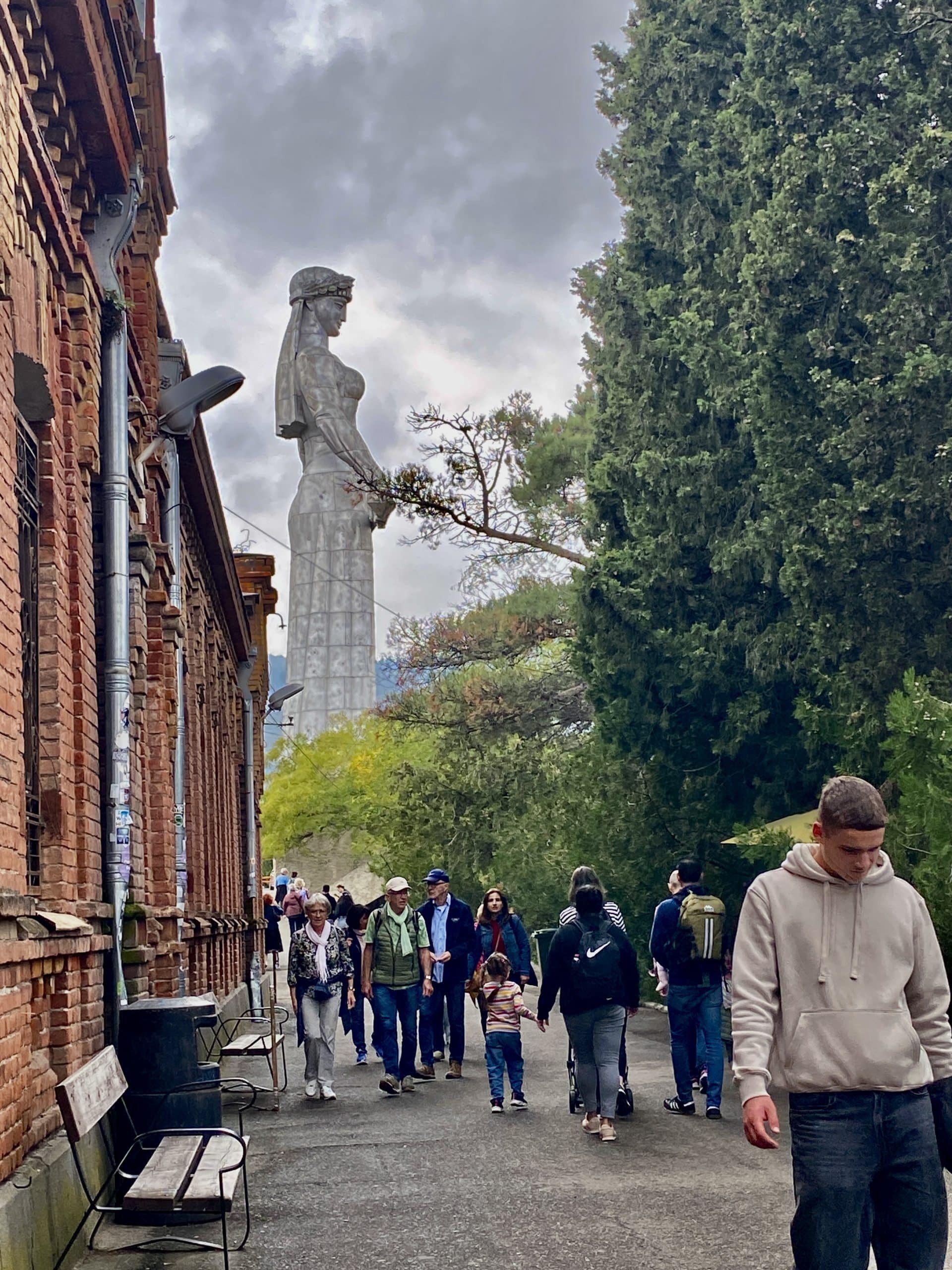
Take the funicular –or do the hike — to the 65-foot aluminum Statue of the Mother of Georgia, who welcomes visitors with a cup of wine in one hand and a sword in the other for the unwelcome guests –or enemies! Installed at the pinnacle of Sololaki Hill, it has an unrivaled view across the length and breadth of Tbilisi.

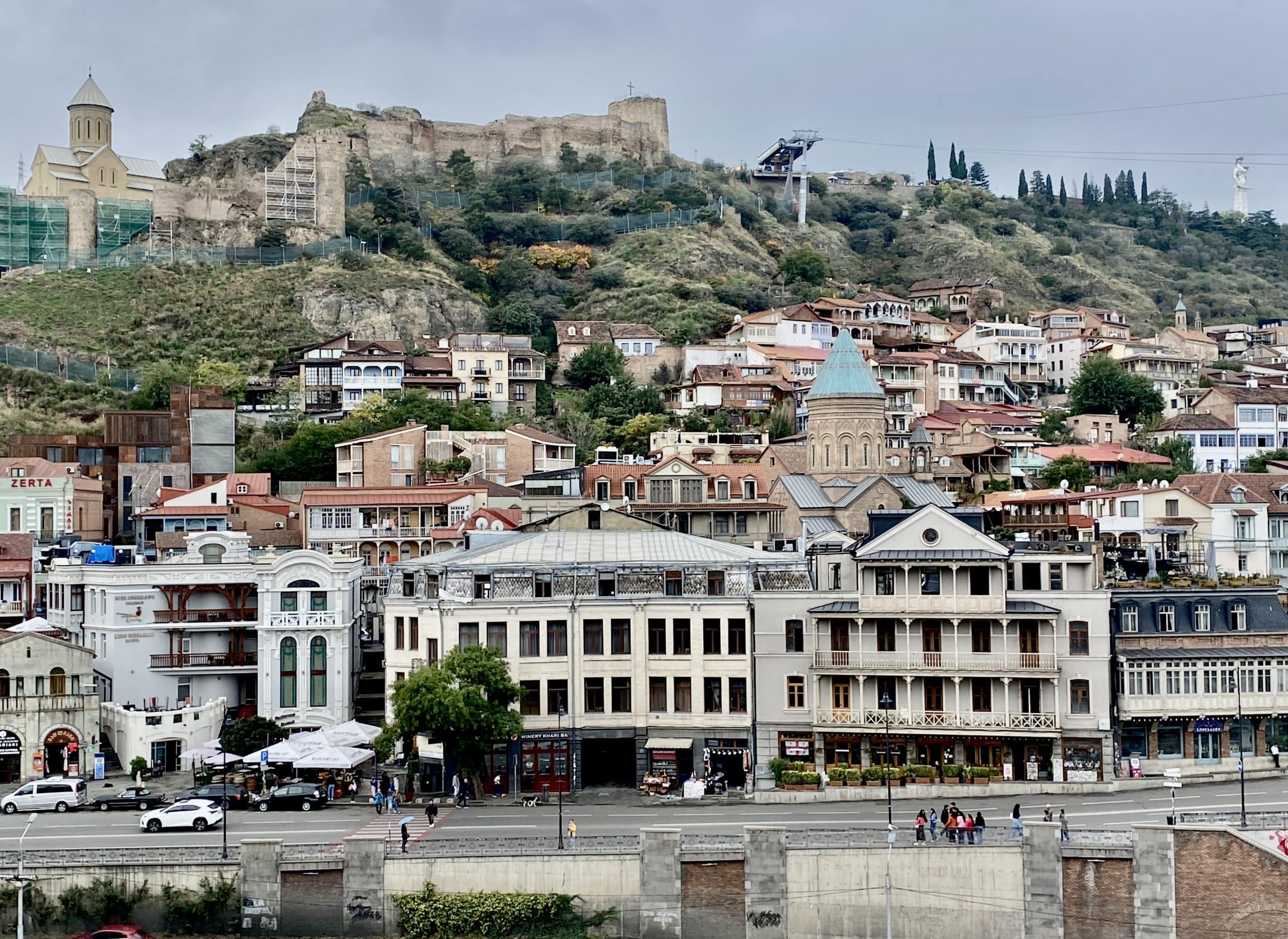
If you like architecture, it is a patchwork of styles, Moorish, Medieval, Art Deco, Art Nouveau, Neo-Classic, Beaux Arts, Italianate, Persian, Soviet Brutalist, and praiseworthy modern buildings — you name it, it’s here.
Did I like Tbilisi? I loved it!
RUSTAVELI AVENUE, TBILISI
All big cities have one iconic street that defines them. That street in Tbilisi is Rustaveli Avenue, named after Shota Rustaveli, the pre-eminent poet of Georgia’s Golden Age in the 12th century. It is 1.5 kilometers long and a beautiful, wide, leafy boulevard.

The Georgian Parliament and all the major museums, galleries, and cultural institutions are to be found on Rustavelli Avenue, plus some five-star hotels, fashion designer shops, restaurants, and cafes. Stroll down Rustavelli Avenue, observe the names of the buildings, and let the history of Tbilisi come alive before your eyes. Rustavelli Avenue should be compulsory viewing for any visit to Tbilisi!
It has also seen many demonstrations and uprisings, during which Georgians have demonstrated against the Russians. The most recent demonstrations were before and after the last elections on October 26th, 2024. Although the Dream Party (the name of the party in power!), controlled by the Russians, won, the majority of Georgians believe the election was rigged. They marched in huge numbers to their parliament on Rustaveli Avenue to express their dissatisfaction with the outcome of the election.
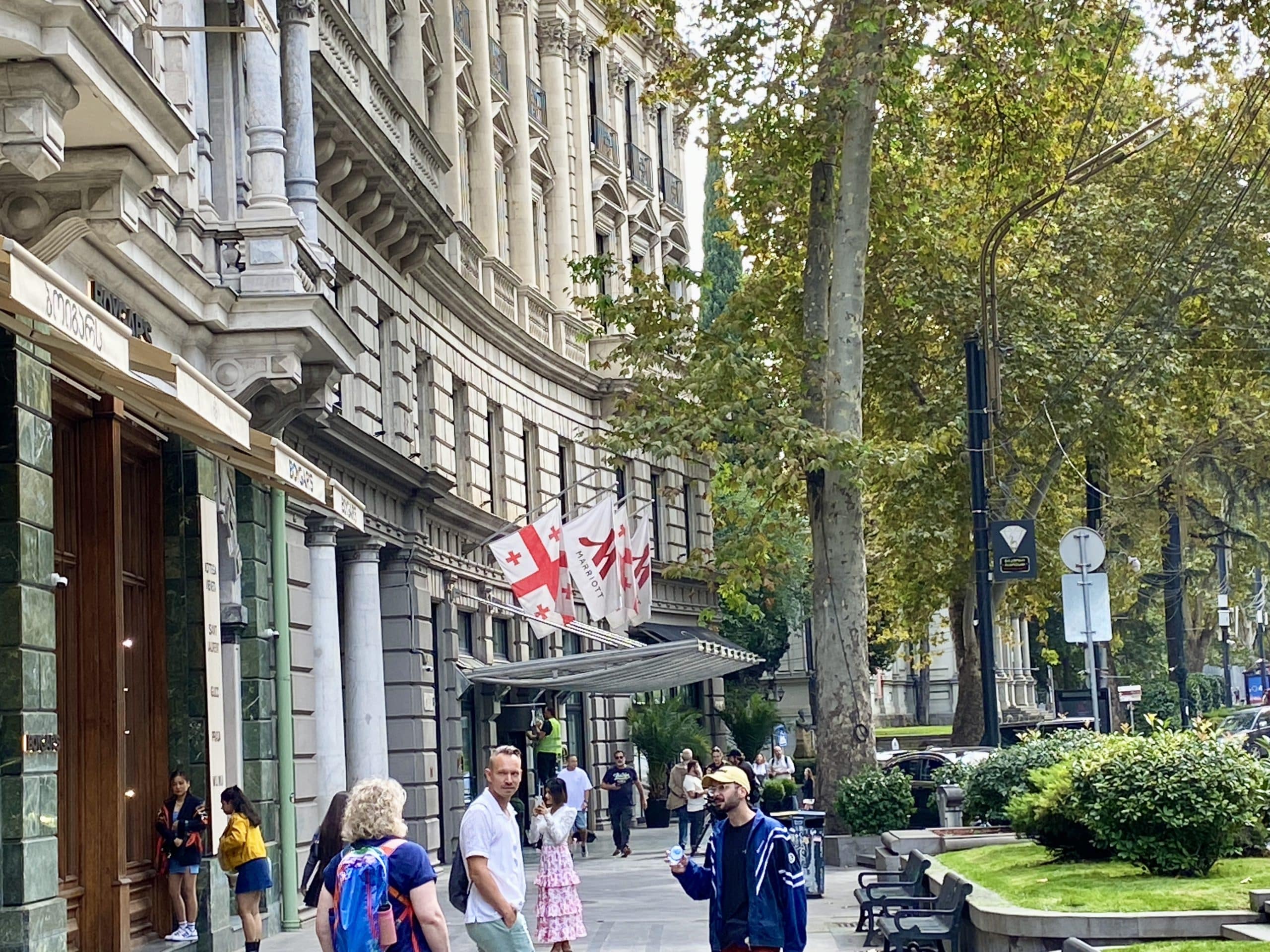
One can easily spend a day walking the length of Rustaveli Avenue, admiring the buildings, visiting the galleries, stopping for lunch or coffee—or a sip of wine—and capturing unique photographs. A friend and I did a six-hour walking tour of seven Tbilisi neighborhoods, including Rustaveli Avenue, and found it to be a treasure trove of Tbilisi’s history.

CLEANLINESS AND SAFETY.
Tbilisi is clean — the roads, the buildings, the people. Getting around in Tbilisi, I used Bolt, which is the equivalent of Uber, and the cars were spotless inside and out, and the drivers were well dressed — no shorts and t-shirt or cut-off jeans.
The streets are cleaned every day. Get up early in the morning,, and you will see the street cleaners (mostly the grandmas) sweeping with their handmade brooms and sweeping again during the day. People were clean and wore clean clothes, and I hardly saw a homeless person on the streets. I cannot explain this; either there are very few homeless people, or the family or the Government takes care of them.


Mostly, people feel safe moving around the city, and Tbilisi is not known for pickpocketing. While visiting the Stampe Hotel on our walking tour, the tour guide left his fanny pack on a table while he walked away to place his order for coffee — and returned to find it still there. I’m not suggesting you leave your passport and credit cards on the table while you go and order coffee. but he wanted to show us how honest people are in Tbilisi.

LANGUAGE.
The Georgian language is spoken only in Georgia, and it has an alphabet of 33 very decorative and beautifully rounded letters. I challenge you to try and read it, or for that matter, to try and speak Georgian. The younger generation learn English in school– but it is not universally spoken. However, in the tourism and hospitality sectors, everyone that I met spoke excellent Englis,h and several of these people said they had learned English on YouTube or immersed themselves in English language TV programs. Taxi drivers can be a fountain of information, but it was challenging to find a Bolt driver (Uber equivalent) who spoke English, although they were all polite and well-mannered
MUSEUMS.
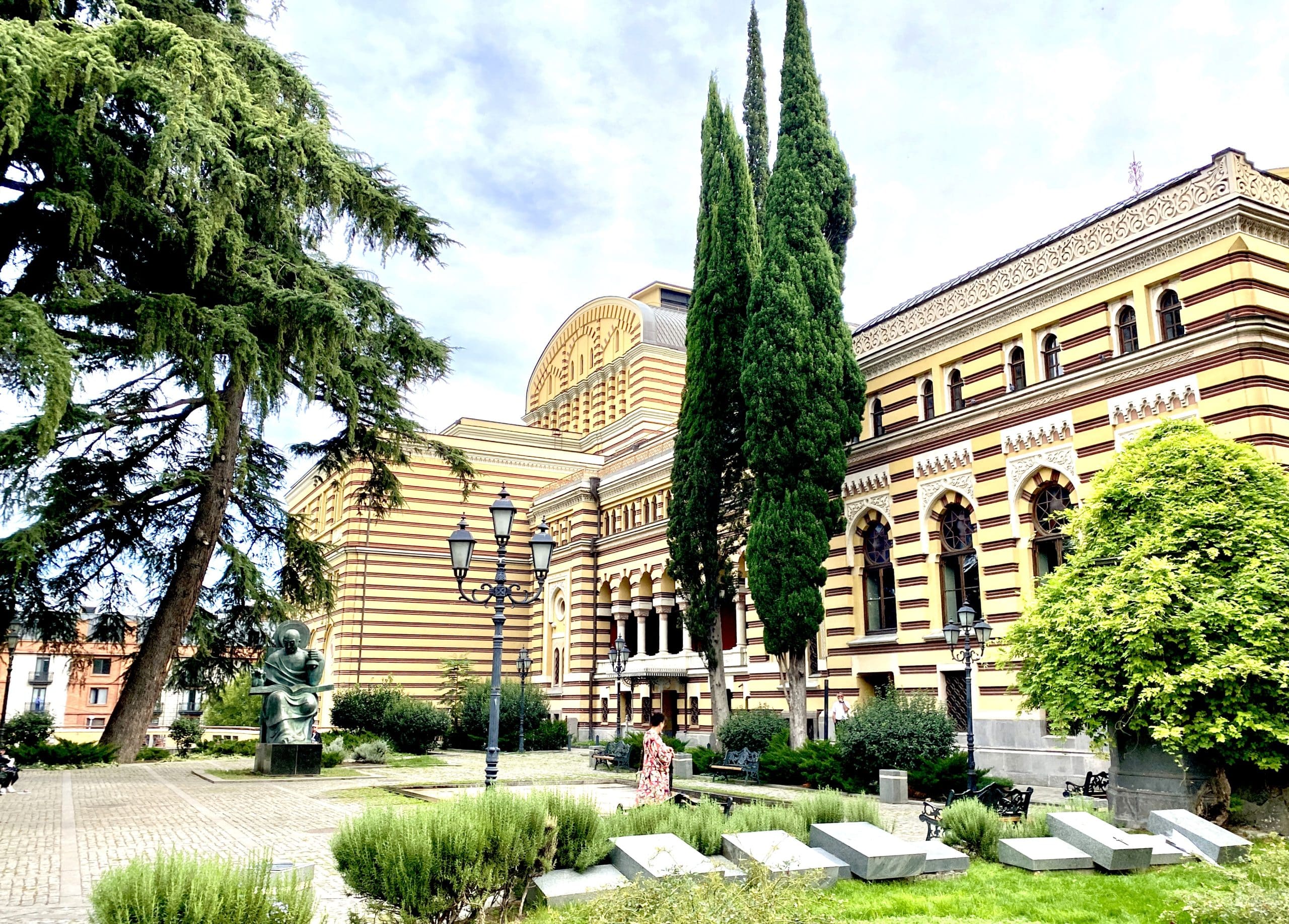
For a small nation, numbering about 3,800,000, and a small city, of 1,100,00 people (these were numbers I found online, and they may not be accurate). Tbilisi has many museums, estimated to number 60, according to Google. The Silk Museum, one of the oldest in the world opened originally in 1887, has recently re-opened to wide praise after a four-year restoration. The National Gallery, the Georgian National Museum. and the Georgian Opera and Ballet Theatre are all situated on Rusatvellli Avenue, the latter in a “must-see” building. The largest collection of restored Soviet-built automobiles can be seen at the privately owned Automobile Museum — this is the biggest collection of Soviet automobiles in the Caucuses, maybe in the world. Many of the cars had originally belonged to prominent Russian citizens in their day.
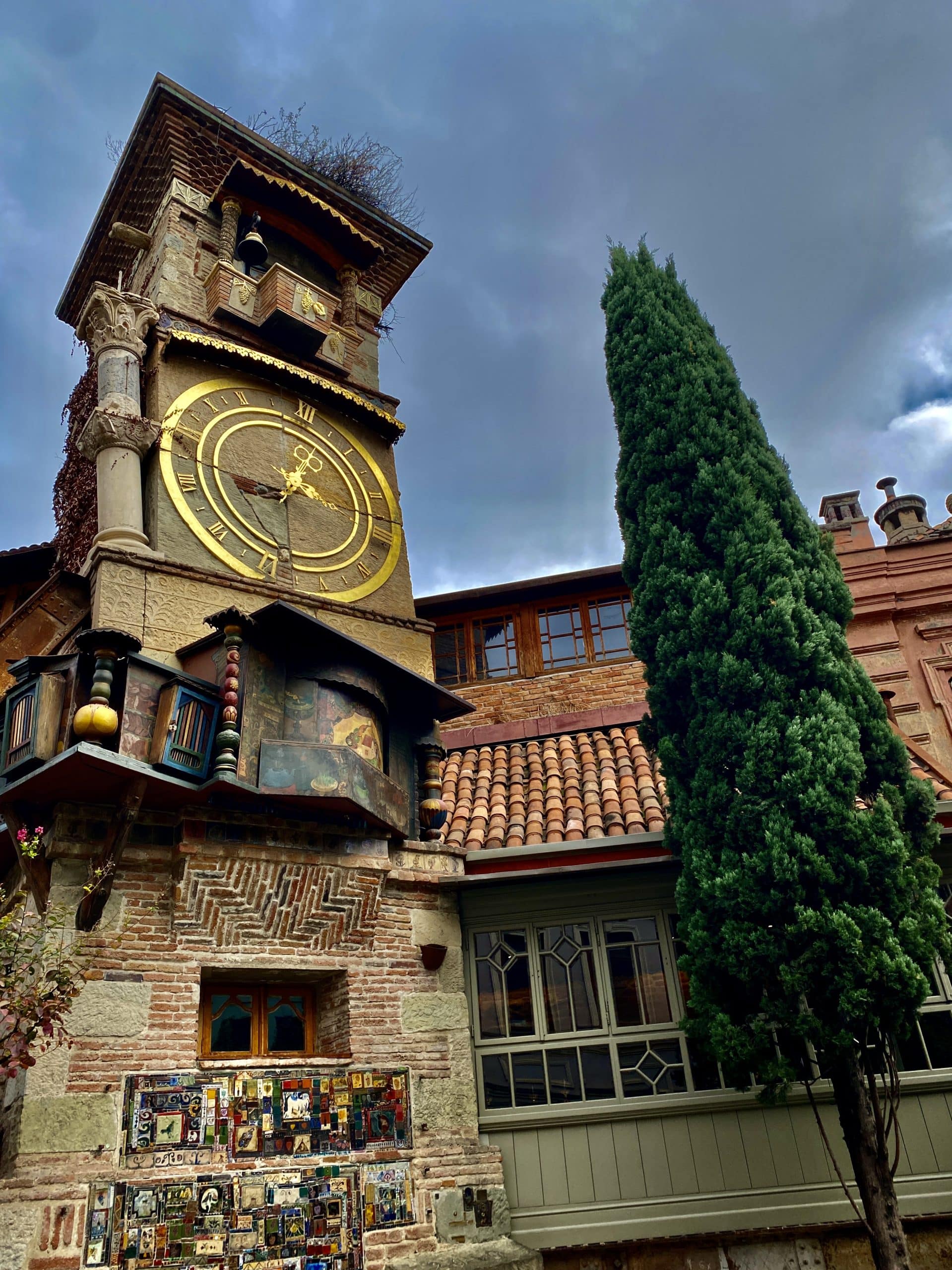
The ClockTower and Gabriadze Theatre, on the list of best museums, is named after its creator, a Georgian screenwriter, director, artist, and puppeteer who is world-renowned. “Though modest in size, the Clock Tower with the Gabriadze Puppet Theater is among the world’s preeminent cultural institutions. Presenting mature puppet performances full of depth and meaning, it has gained the respect and recognition of international audiences and critics alike” (Quote from the Tbilisi Local Guide). With only 80 seats, a ticket costs $10.00, yes, ten dollars, to see a performance, and this is the hardest ticket to get in Tbilisi!
The list goes on, and while I am not a museum enthusiast, I have to admit these are some unique museums.
MUSIC and DANCE.
Georgians are known for their fine voices, and most major opera companies in Europe have one or two Georgian principals. Polyphonic singing is a centuries-old art form and an essential part of Georgian culture.

It is quite usual to be sitting in a restaurant when unexpectedly four guests sitting at a table will burst into song. Usually, this is pre-arranged, but it is entertaining to witness this outburst of song that is unique to Georgia.

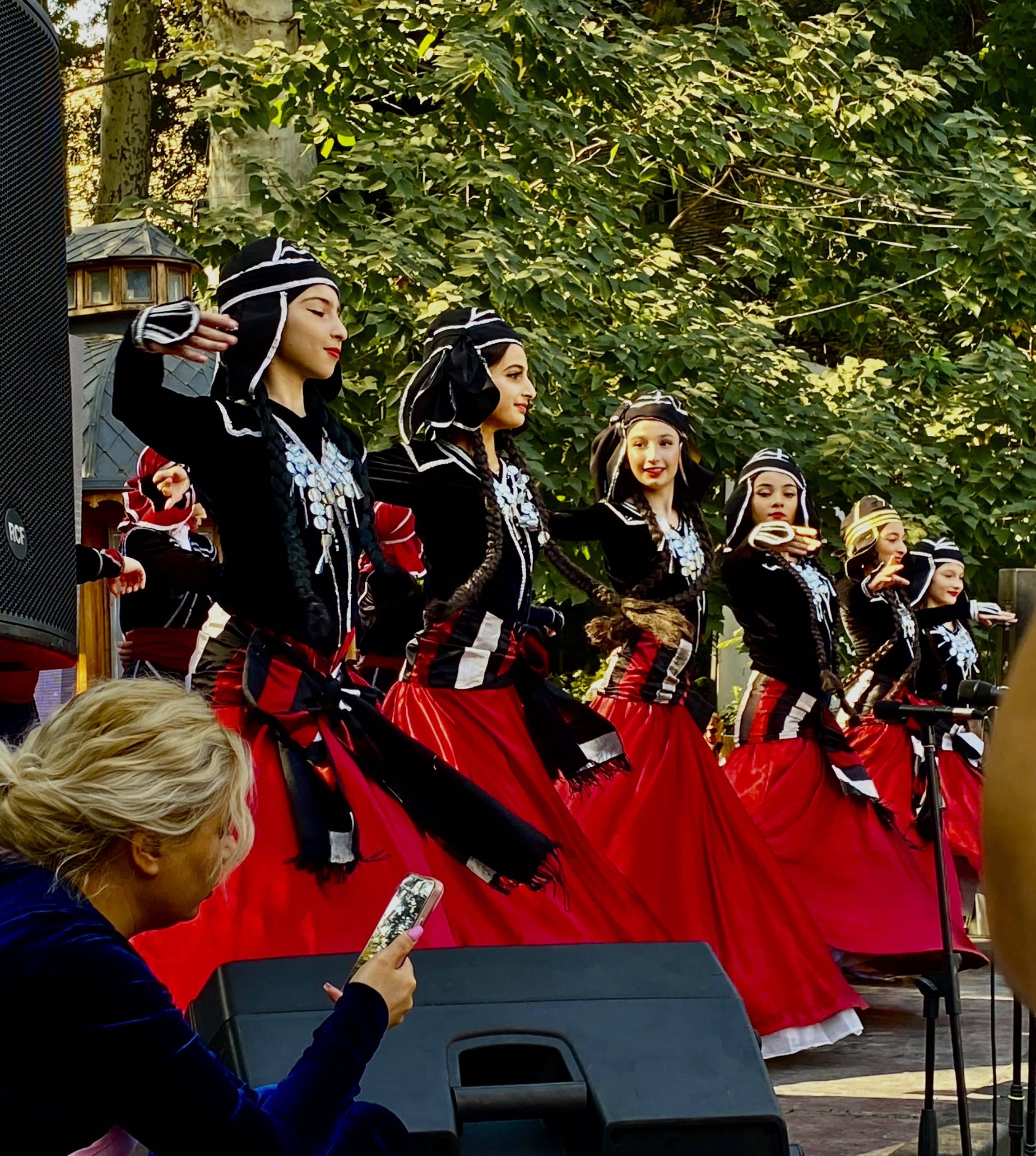
Generally, I do not like “folk dancing,,” but in Georgia, the dancers are trained froma very young age. Theirir dancing is captivating and requires great skill and body control. Not only are the dance steps intricate, but the use of hands in the choreography is very important. I loved watching these dances performed in national costumes and perfectly executed footwork. Many are trained right here on Rustevalli Avenue at the Georgian Nation Ballet from a very young age.
During our nine-day tour of Georgia, we sang and danced at different venues on the Focused Escapes itinerary.
WINE.
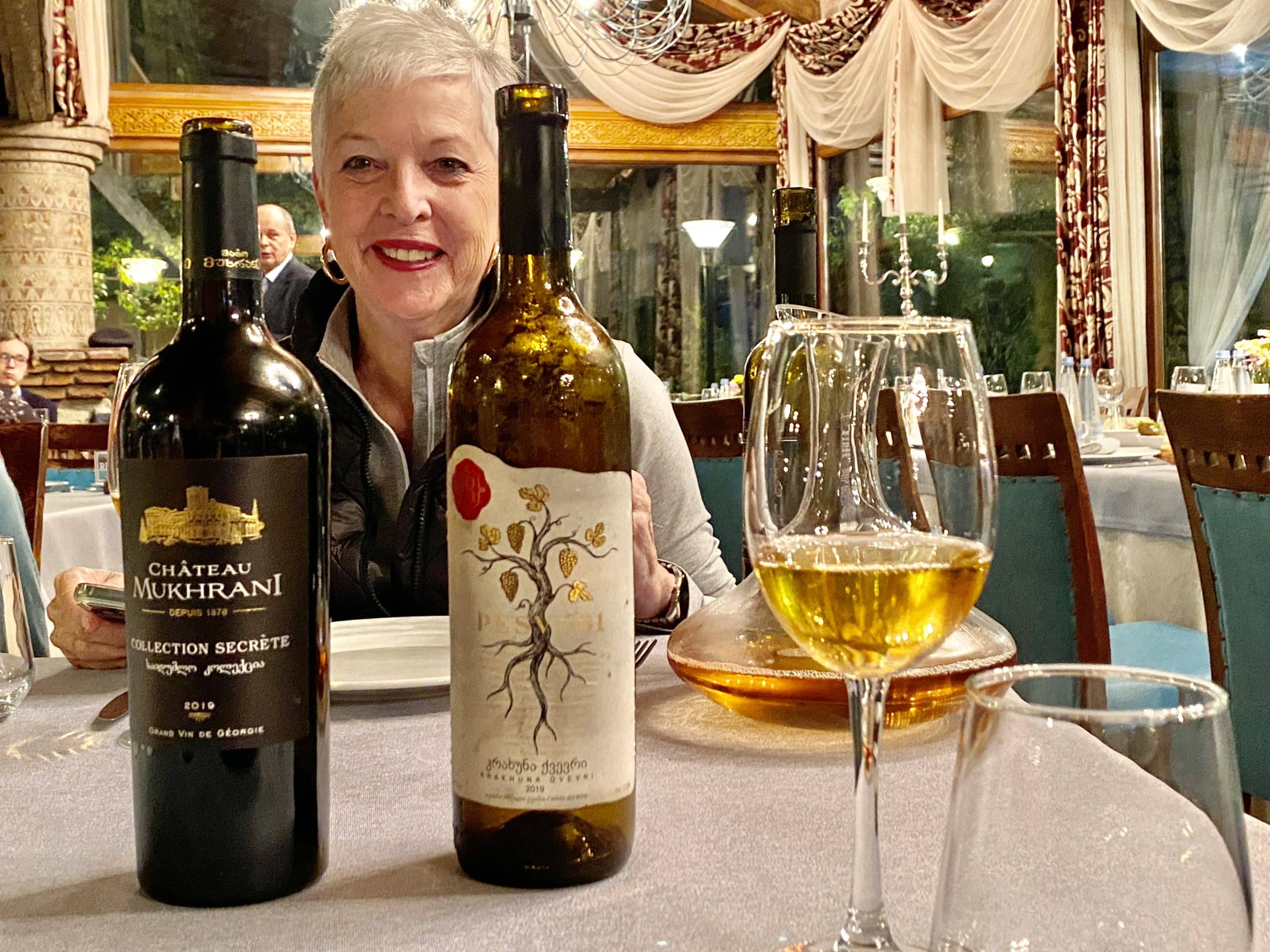
Georgia is known as “the cradle of wine,,” and archaeologists have found indications that wine was made here as far back as 8,000 BC—believe it or not! Wine flows freely throughout Georgia and is synonymous with outstanding hospitality.
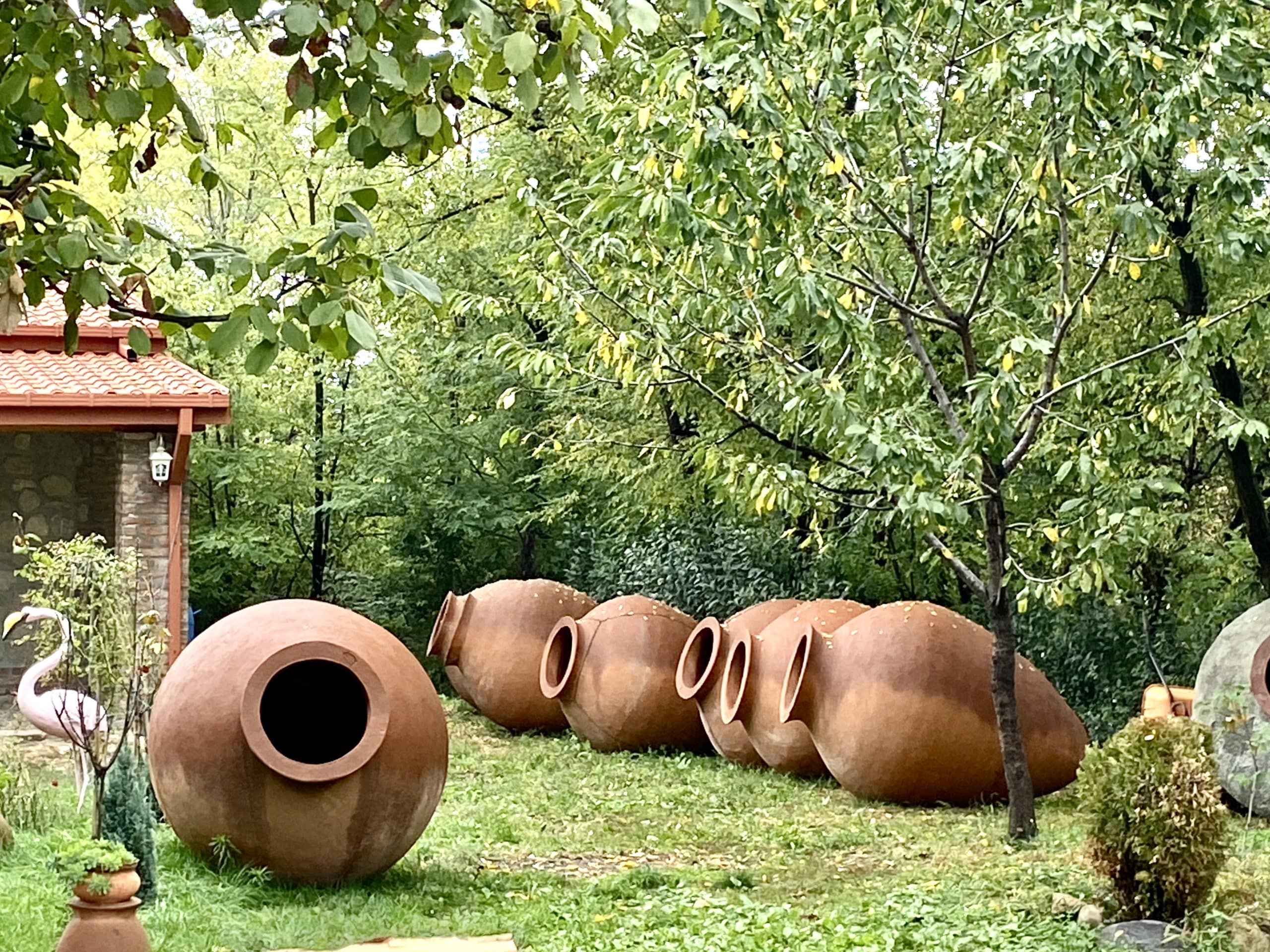
“According to archaeological evidence, the first Georgian wines were made and stored in earthenware vessels called quevri. The qvevri is Georgia’s most important and best-known winemaking vessel, and it remains the centerpiece of traditional winemaking in Georgia”. Wine is also stored underground to mature in the qvevri.
Georgia produces white, amber, and red wines. Amber wine, sometimes described as orange wine, is made with white grape skins that are left to macerate for longer than usual. This changes the taste and increases the tannins, giving it the richness and complexity of red wine.
Once upon a time, Georgia had 528 grape varietals, some of which had survived thousands of years. However, during the Soviet era, several of the more exotic varieties were culled, as the Soviets had little appreciation for winemaking!

On our Focused Escapes Tour, we followed the Wine Route, making our way to Kakheti, the center of winemaking in Georgia. We visited wineries, restaurants, and private homes, and we sampled (drank!) a lot of wine, much of which was sulfate-free.

Lori arranged a grape stomping at one of the wineries, allowing members of our group to participate. We watched the grape juice being “captured” as it was “stomped” out of the grapes. The wine flowed, and several bottles of wine were opened for every meal we had (not breakfast!).
Wine is an important subject in Georgia, and one paragraph is insufficient. Although I am not an oenophile, I hope to write more about wines and wine-making in a future post.
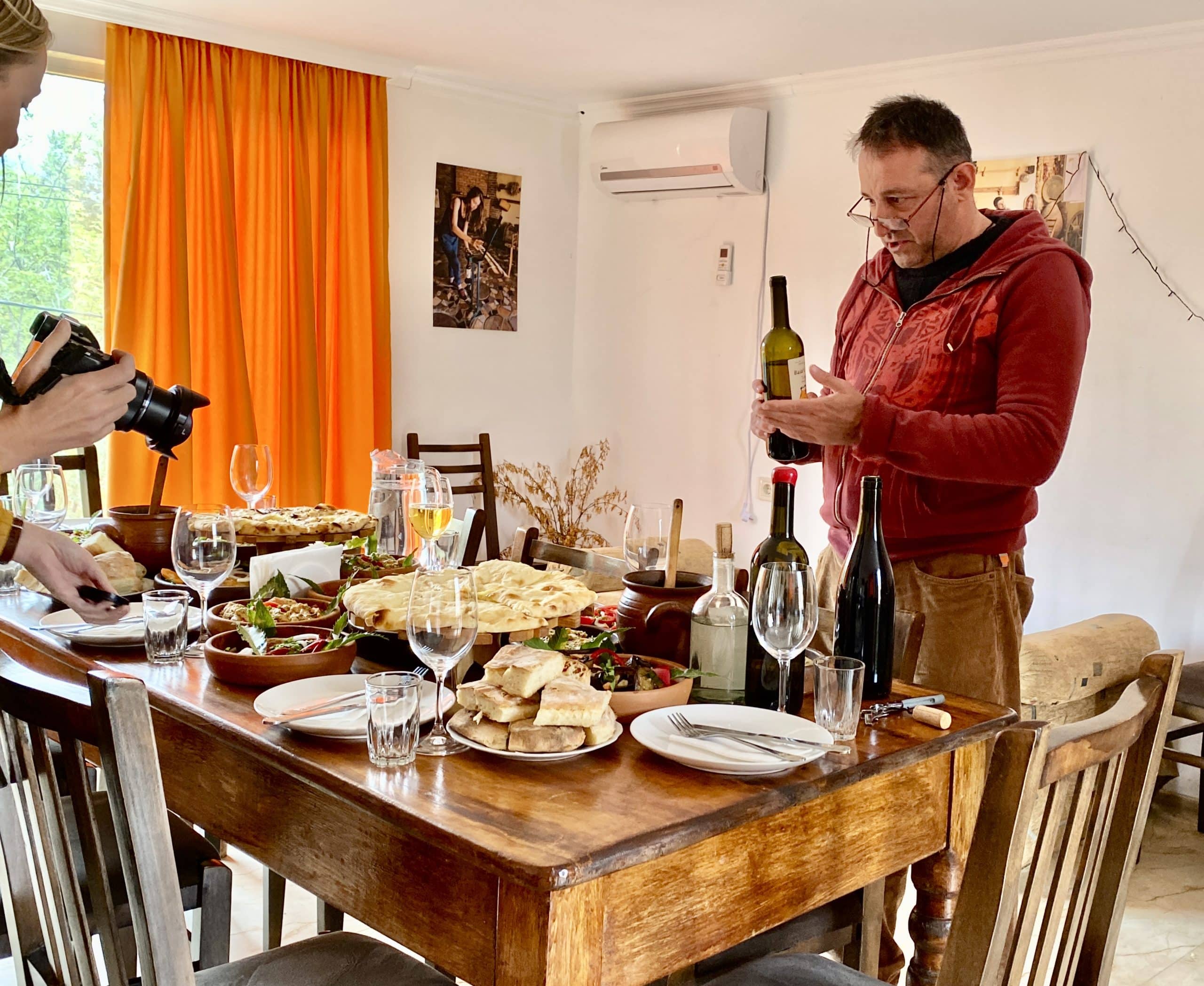
THE TAMADA.
A Tamada is unique to Georgia and he creates the ambience at the dinner table with his toasts.
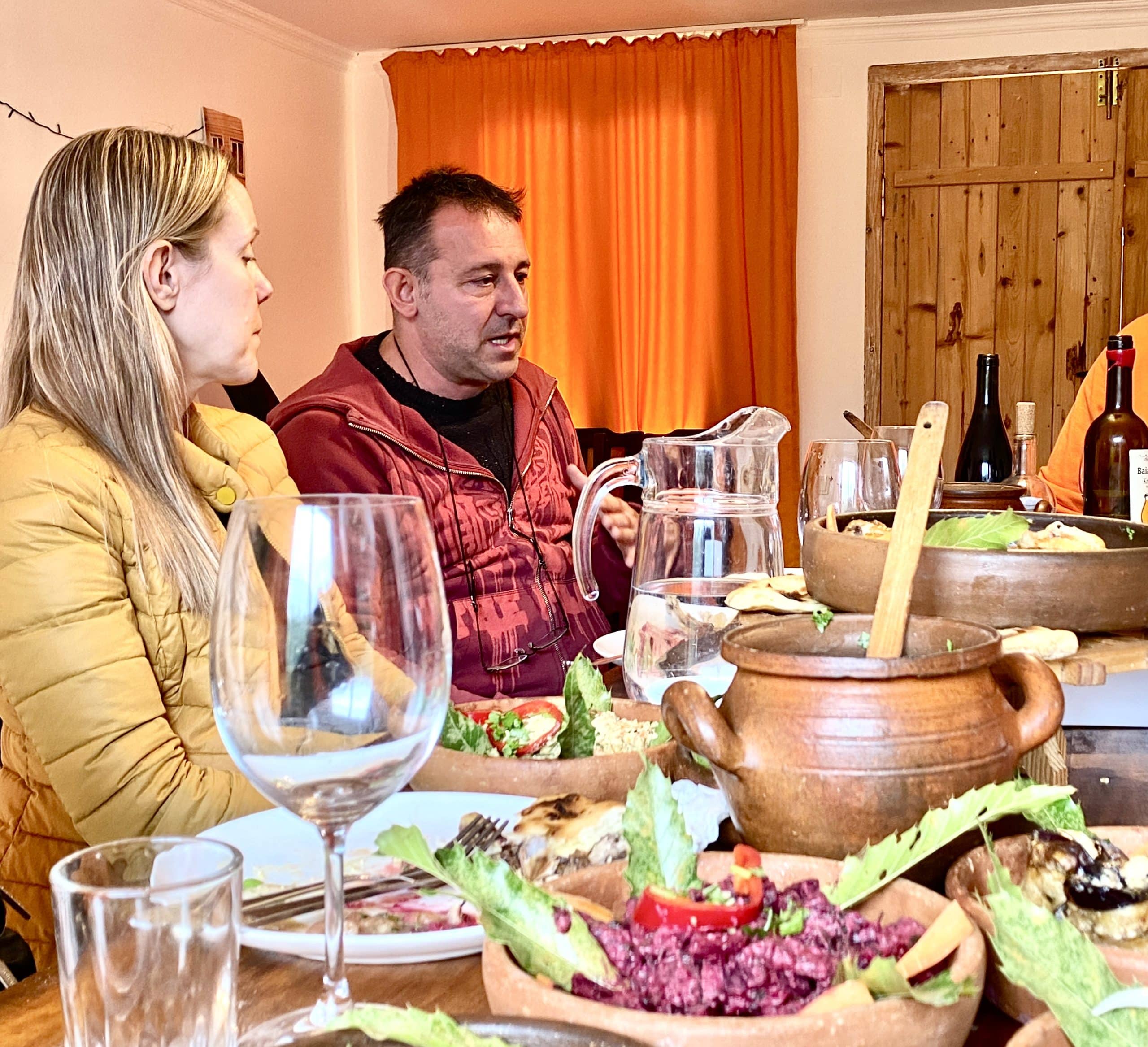
What is a Tamada? Simply speaking, he is a toastmaster who offers several toasts during the meal. The toasts can come rapidly, and just as you are putting your glass down, the Tamada finds another reason to toast. Each toast requires a sip or three of wine, so the party gets jolly very quickly.

Our Tamada was also our tour guide who accompanied us throughout our journey and he was a skilled toastmaster with an engaging personality. His name is Tsotne, a born Georgian, and Tsotne had an endless number of original toasts that he would roll out at each mealtime. The ritual was, after the toast, before you take a sip, you have to clink glasses with everyone at the table and then drink in unison
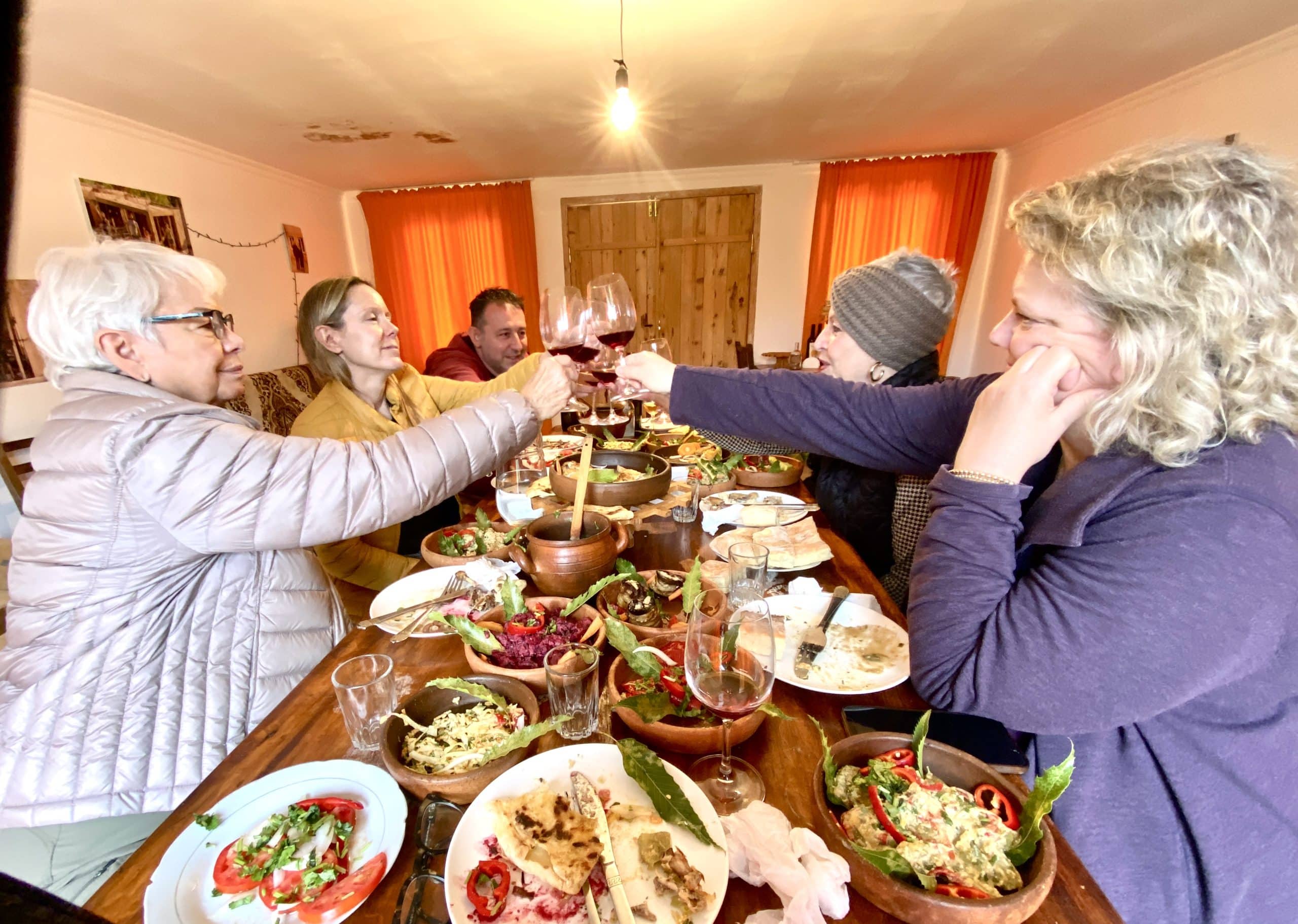
In this picture, Tsotne, the Tamada has made the toast. We can now drink and enjoy the bountiful food — – until the next toast!
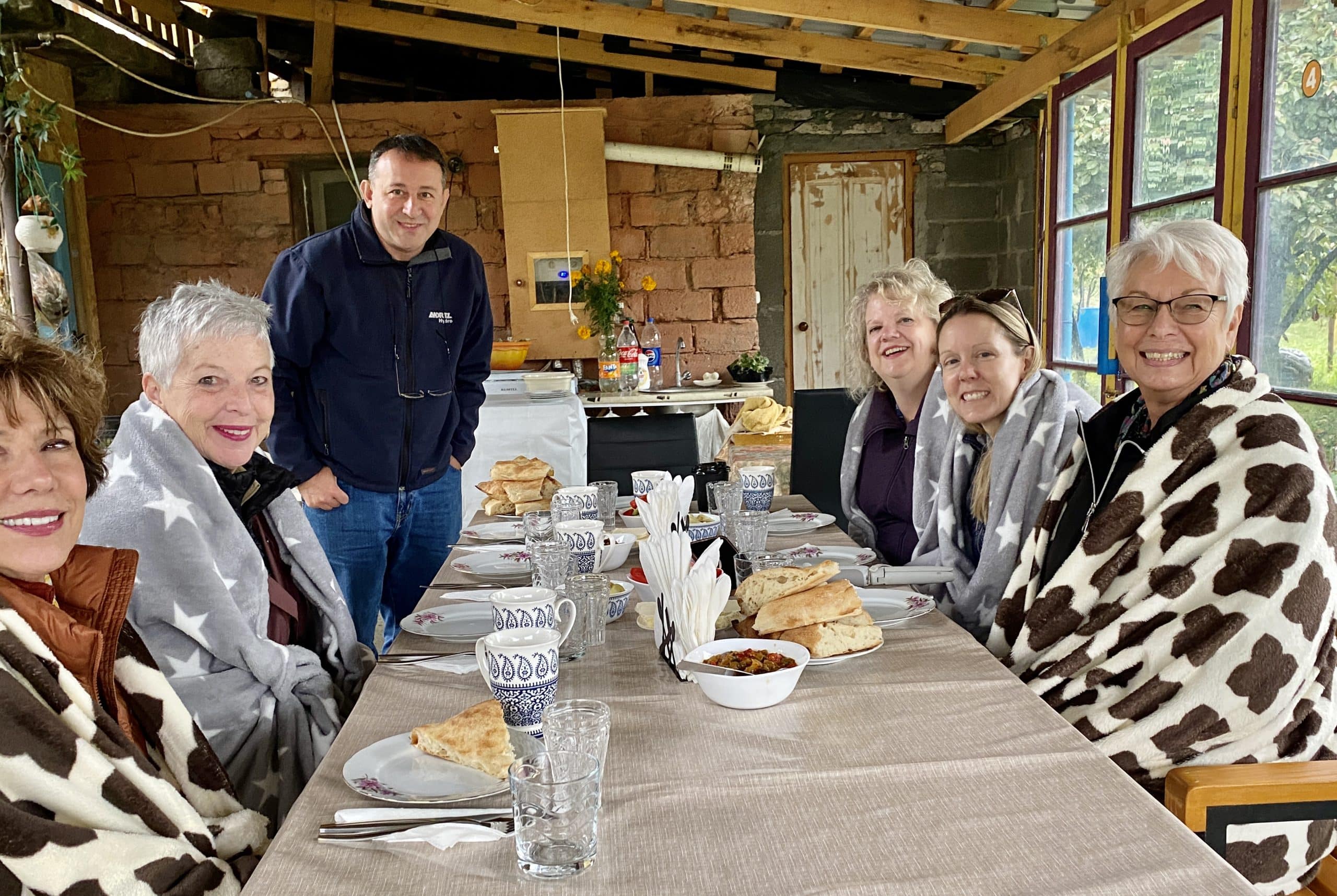
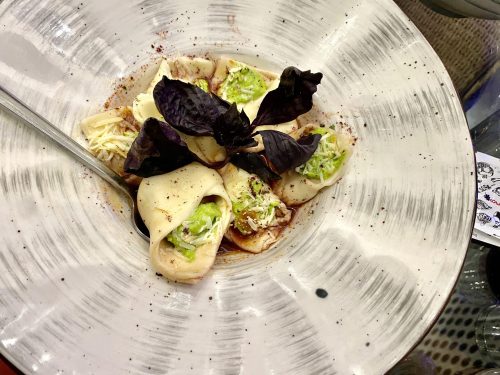
The food we were served looked like illustrations from a gourmet magazine. It was beautifully plated and presented on decorative platters, and it was always accompanied by freshly baked bread and local cheeses. Several bottles of wine and a non-alcoholic fruit drink accompanied the food. Led by Tsotne and his toasts, we also spoke a lot about wine and winemaking, and our group included wine connoisseurs.
FOOD.
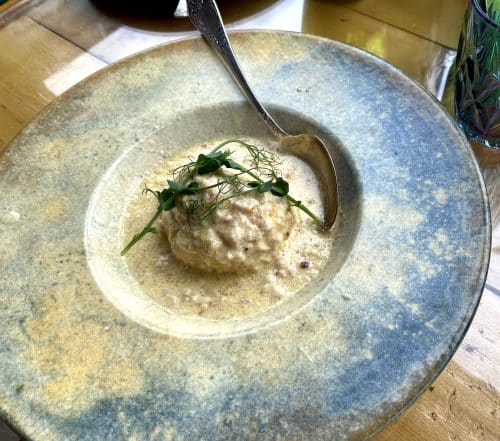
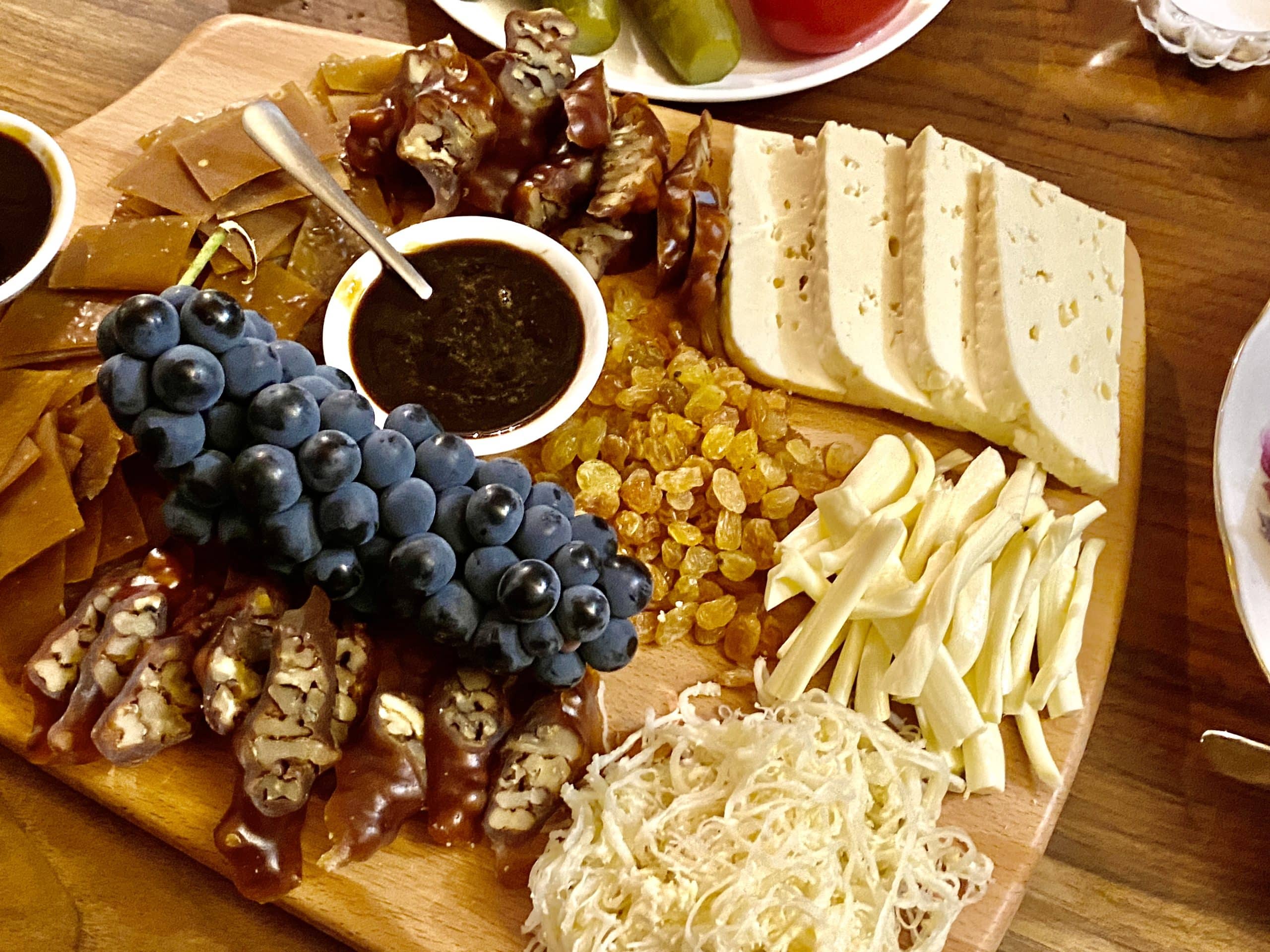
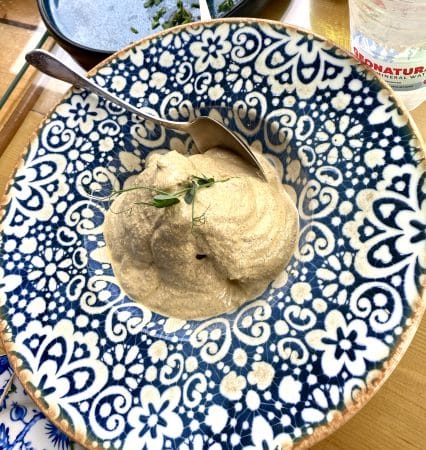 Did we ever eat! This could have been called a gastronomic tour of Georgia. We ate in restaurants, private homes, and wineries and tasted a cross-section of Georgian food.
The meals presented by Focused Escapes went above and beyond my wildest expectations, and we enjoyed the bounty of Georgian food and wine. Most of our evening meals were known as “Supra,” a Georgian feast, eaten family style, where you share food and wine in a celebratory setting. However, thinking back, it seems like many of the lunches were also “supra”! And what about the breakfasts that were like several brunches rolled into one breakfast!

“Supra” translated in Georgian, means tablecloth, and the table was always covered with a decorative tablecloth.
As our guide Tsotne mentioned earlier, the Tamada was essential to the Supra, and the toasts kept coming as more bottles of wine were needed.
The menus comprised locally sourced ingredients and always included a selection of salads, hors-d’oeuvres, platters of meat, and, occasionally, fish. There were many sauces blended with spices and ground nuts, freshly baked bread, and local cheeses. The table top was covered with freshly prepared food presented in an array of decorative plates and platters, each one vying for attention. All the food was homemade, prepared by the women of the house. Our photographers in the group (that was everyone!) could not get enough pictures of the ‘supra’ dinners, tables laden with food, and goblets of white, amber, or red wine — this was food porn at its erotic best!


We commented on the overabundance of food and wondered who ate what was left unfinished. We were told the food was not wasted. It would be shared among family, neighbors, and homeless dogs, who may have been homeless but did not go to sleep hungry. (More on the homeless dogs in a later paragraph.) Furthermore, if all the food was eaten, then perhaps the host had not prepared enough!
The “supra” was a treat because we felt like guests in our hosts’ homes, enjoying their hospitality! The “supra” is also unique to Georgia.

DOGS.
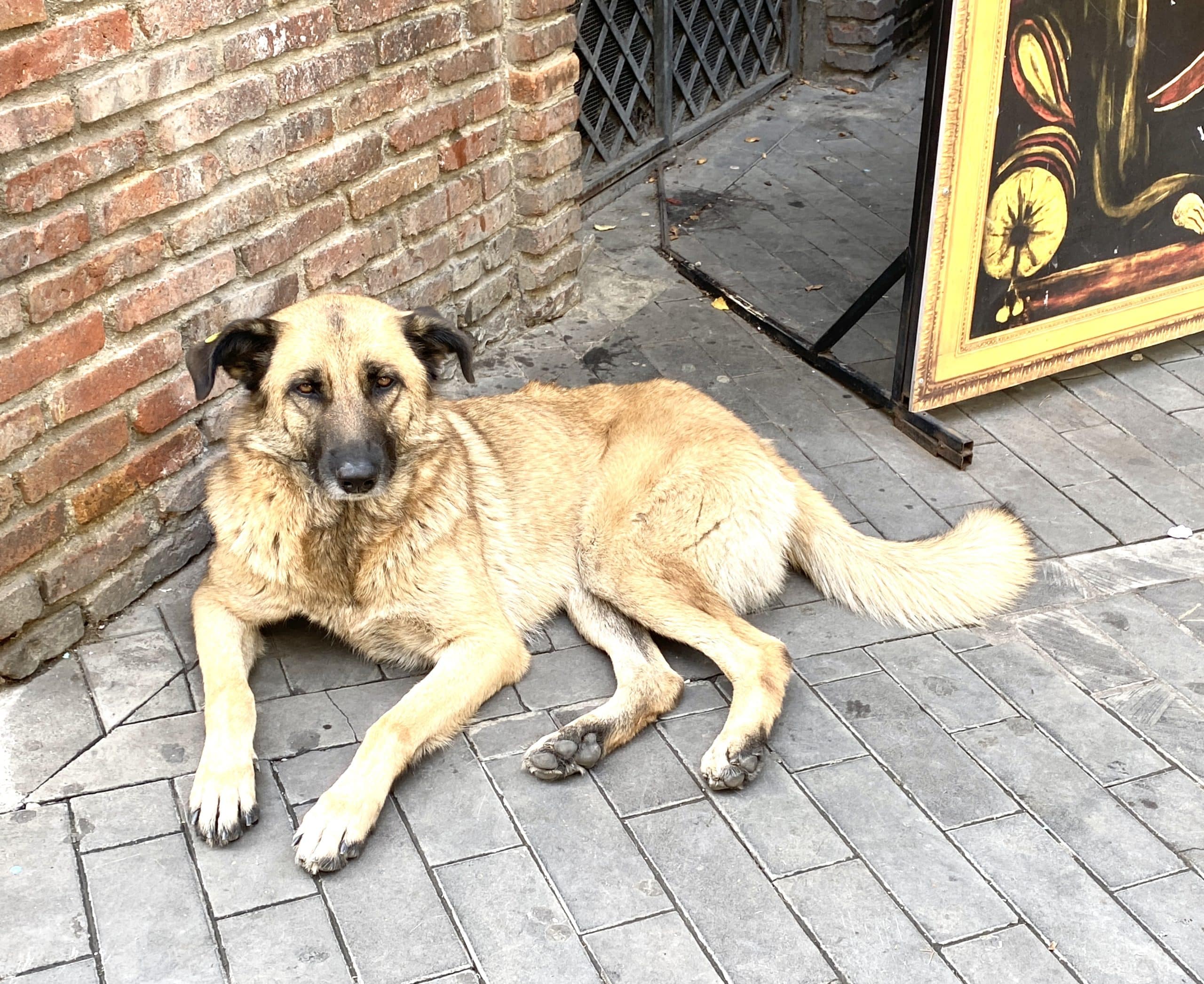
Georgians are unmistakeably concerned about and love dogs. It is estimated (unconfirmed) that there are more than 100,000 stray dogs in Georgia, including 35,000 -80,000 in Tbilisi.
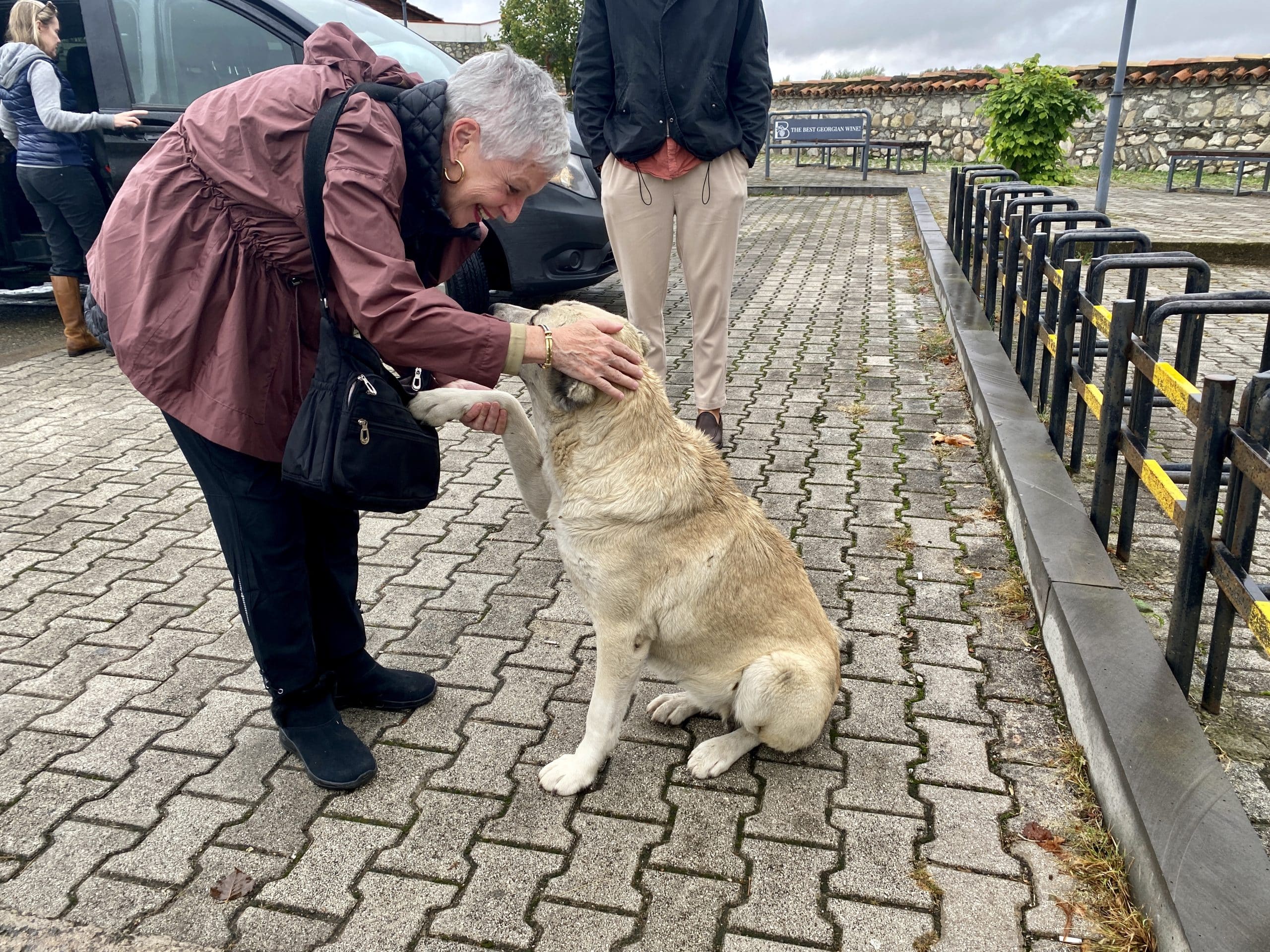
There are stray dogs on the streets, in the markets, in the stores, the hotels, and they blend in with the populace. but they are not afraid and move freely among the people and different places of interest.
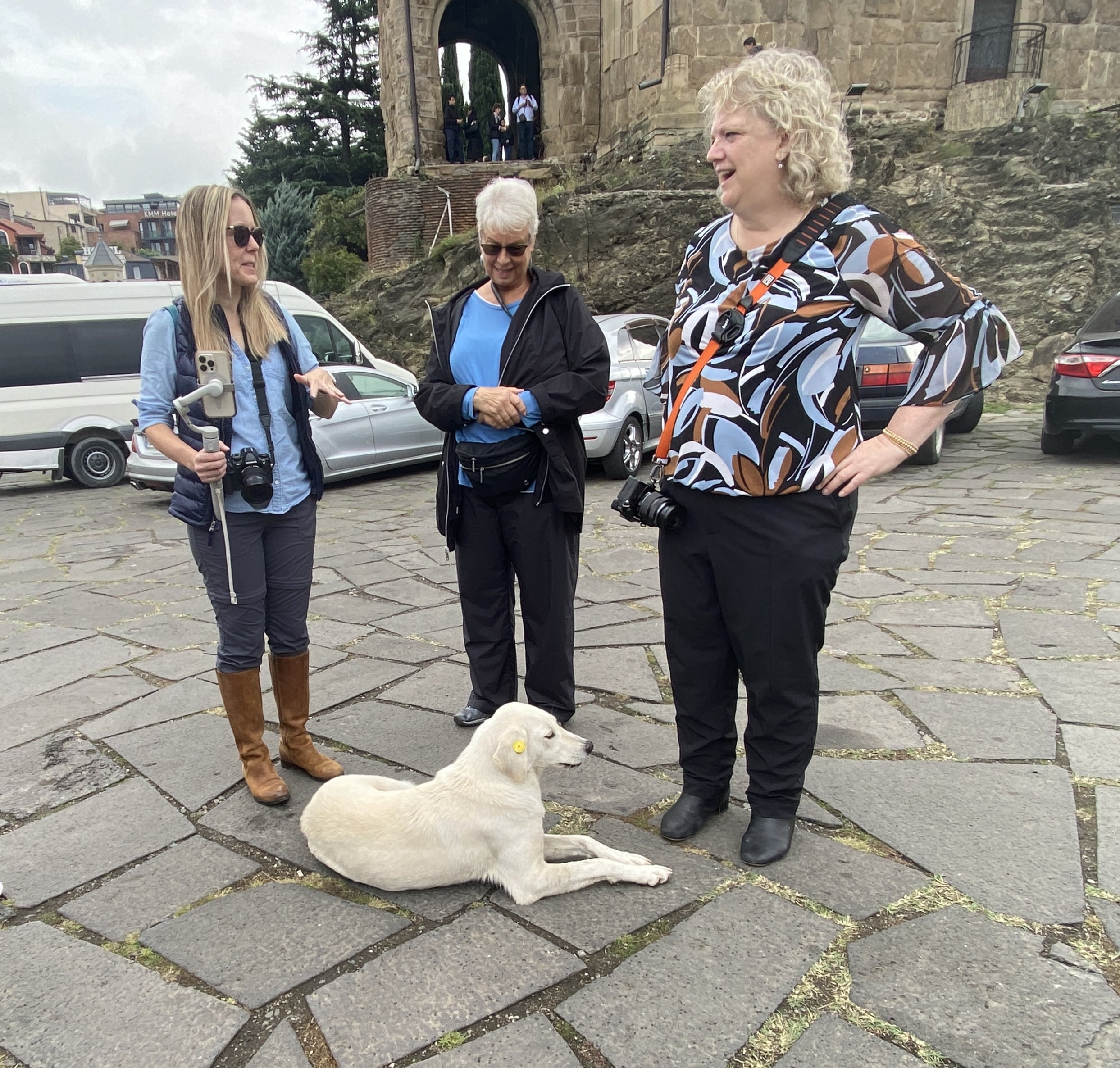
They join tour groups where they vie for attention. Tbilisi has the largest stray dog population, but they can be found in every city and town throughout Georgia.

Everyone feeds the dogs, including the hotels and restaurants, and no dog goes hungry. They follow groups of people because they know they will be petted. If you stop to pet them, they give you their paw.
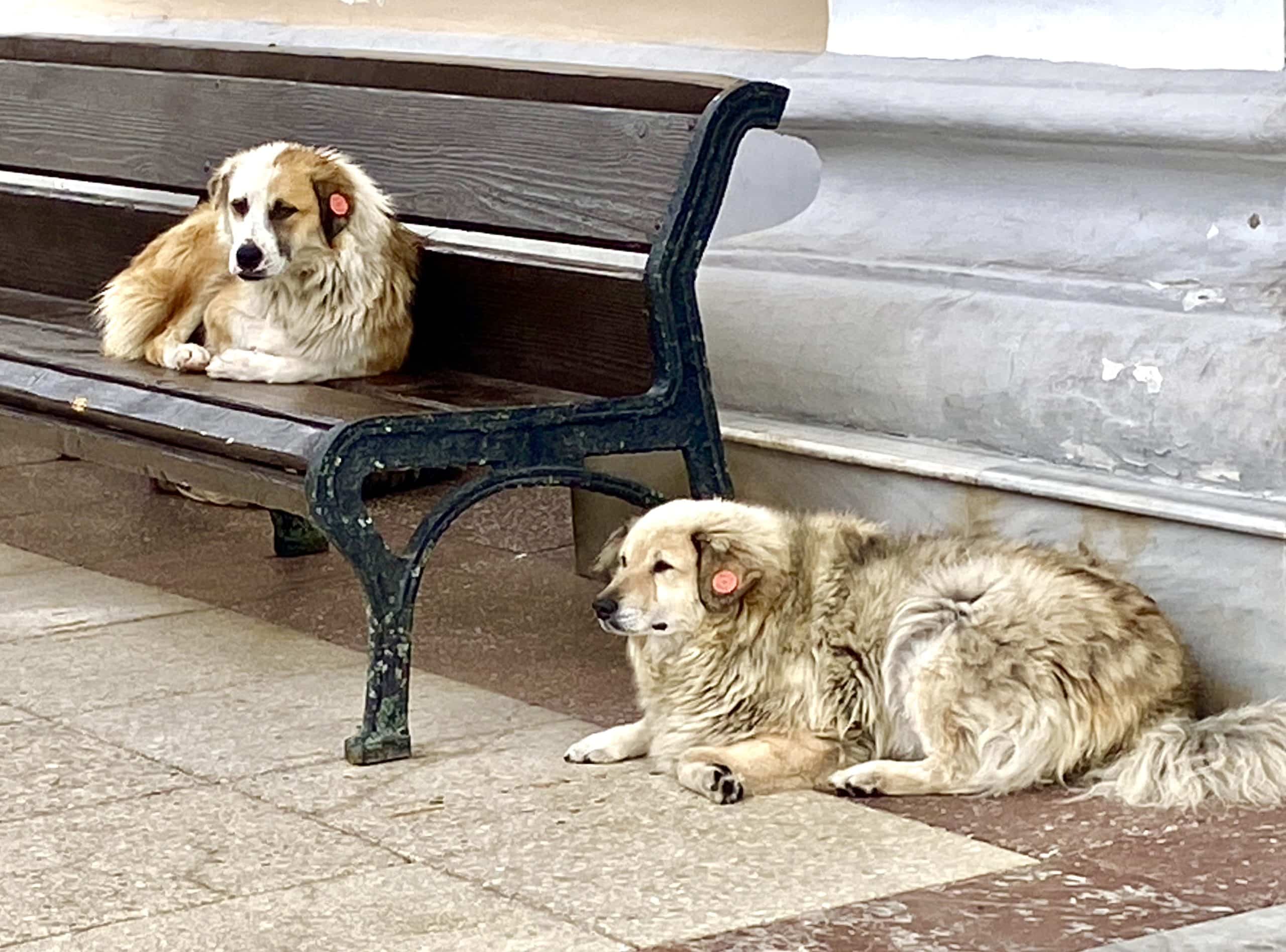
Each dog has a tag in his ear, and they are vaccinated and neutered. The tags are red, yellow, or green. Red means to approach the dog cautiously, yellow means quite friendly and a green tag means very friendly. You never see a stray dog with his tail down. The Georgians love their dogs and take responsibility for their well-being.
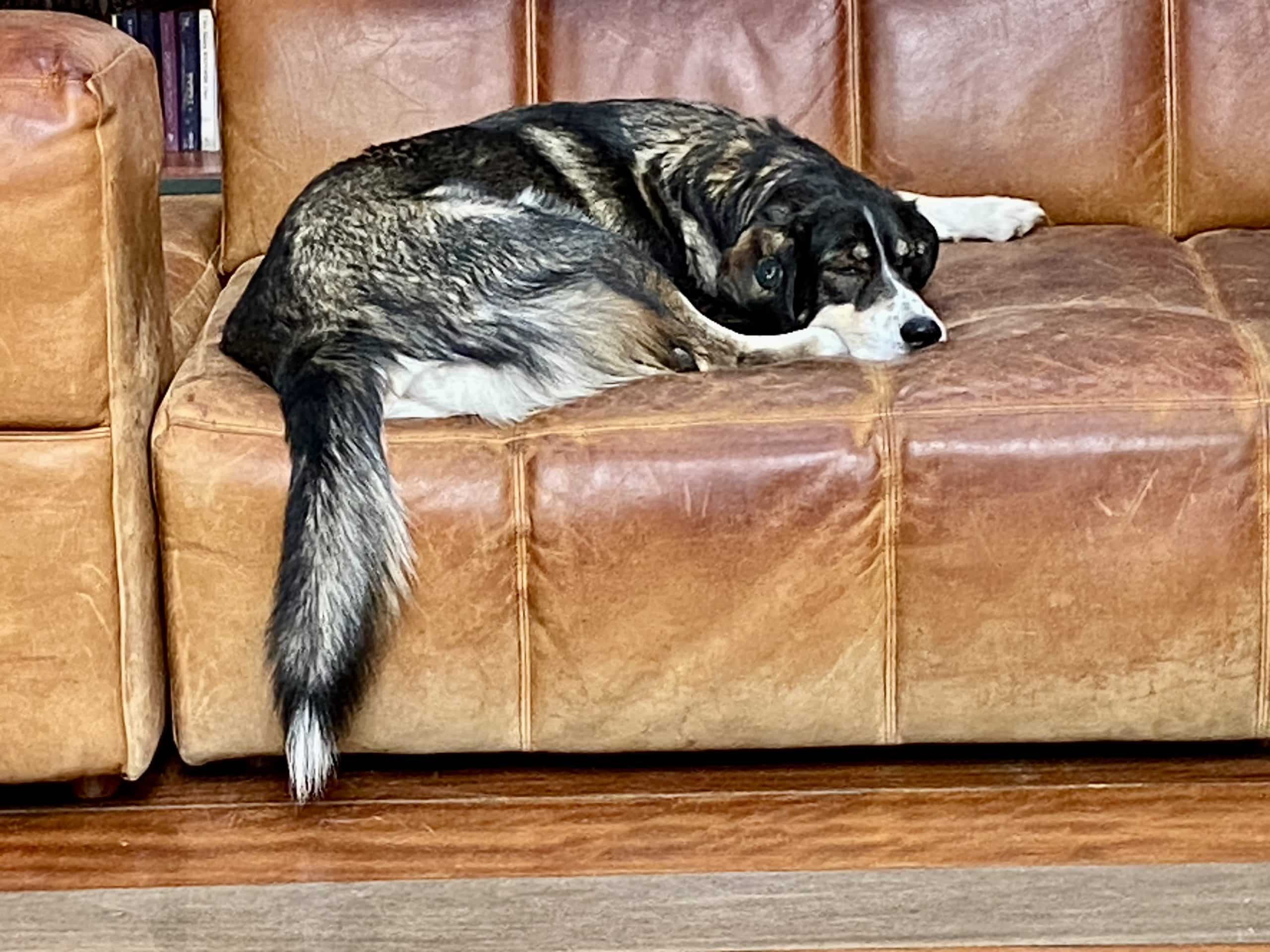
This dog was lying on the sofa in the Stampe Hotel, one of the best hotels in Tbilisi! It’s a dog’s life!

THE OLD CITY.
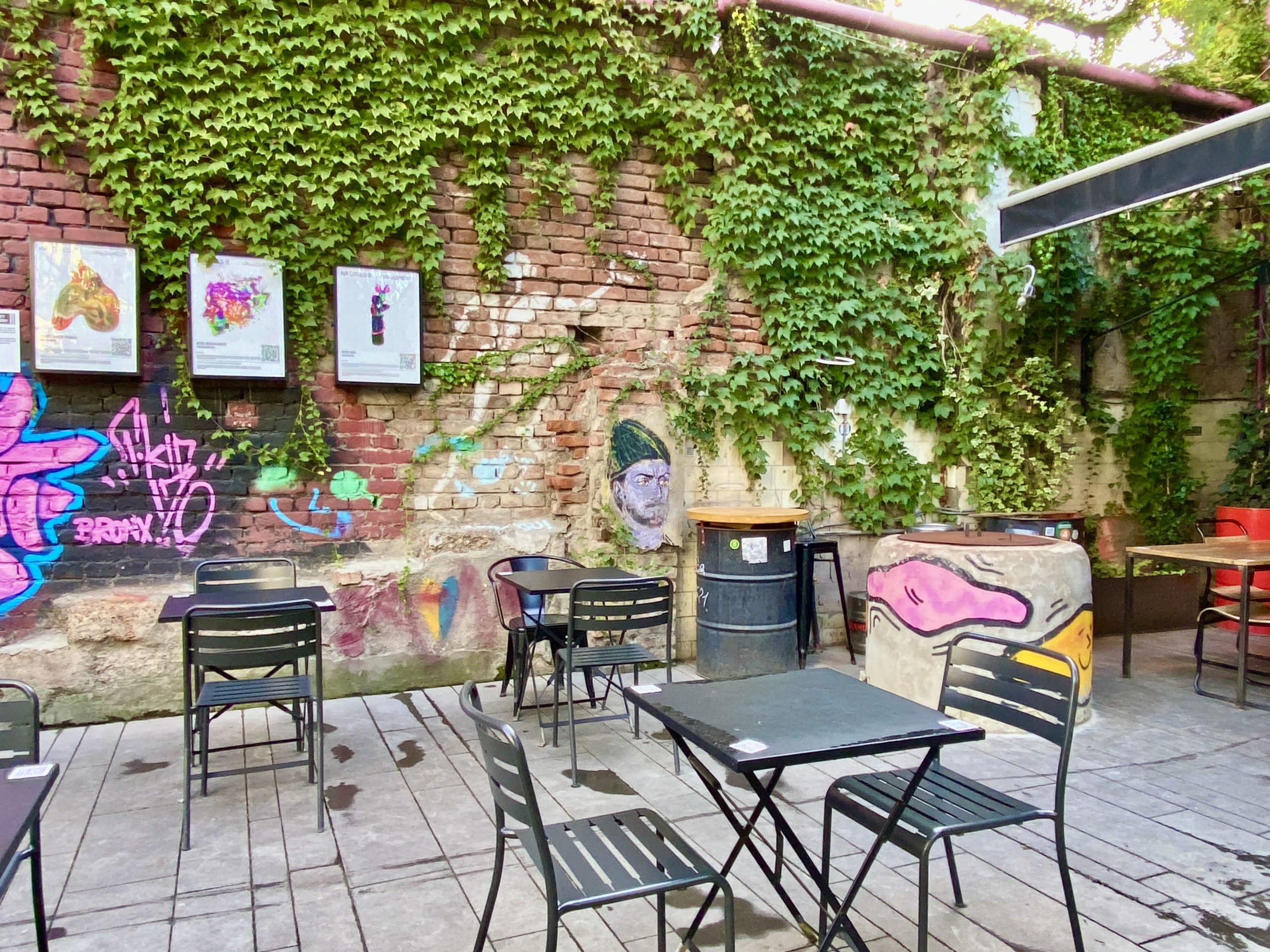
The Old City is a labyrinth of streets and alleys, with interesting back streets, intricate hanging balconies, and beautiful ironwork. Some of the old buildings have been repurposed into cafes, wine bars, and breweries to keep up with the changes that are happening in Tbilisi. The Old City is essential viewing, and I enjoyed wandering through the Old City, with its interesting shops, many restaurants, and it s open-air stalls selling fresh fruit and artistically created dried fruit arrangements.
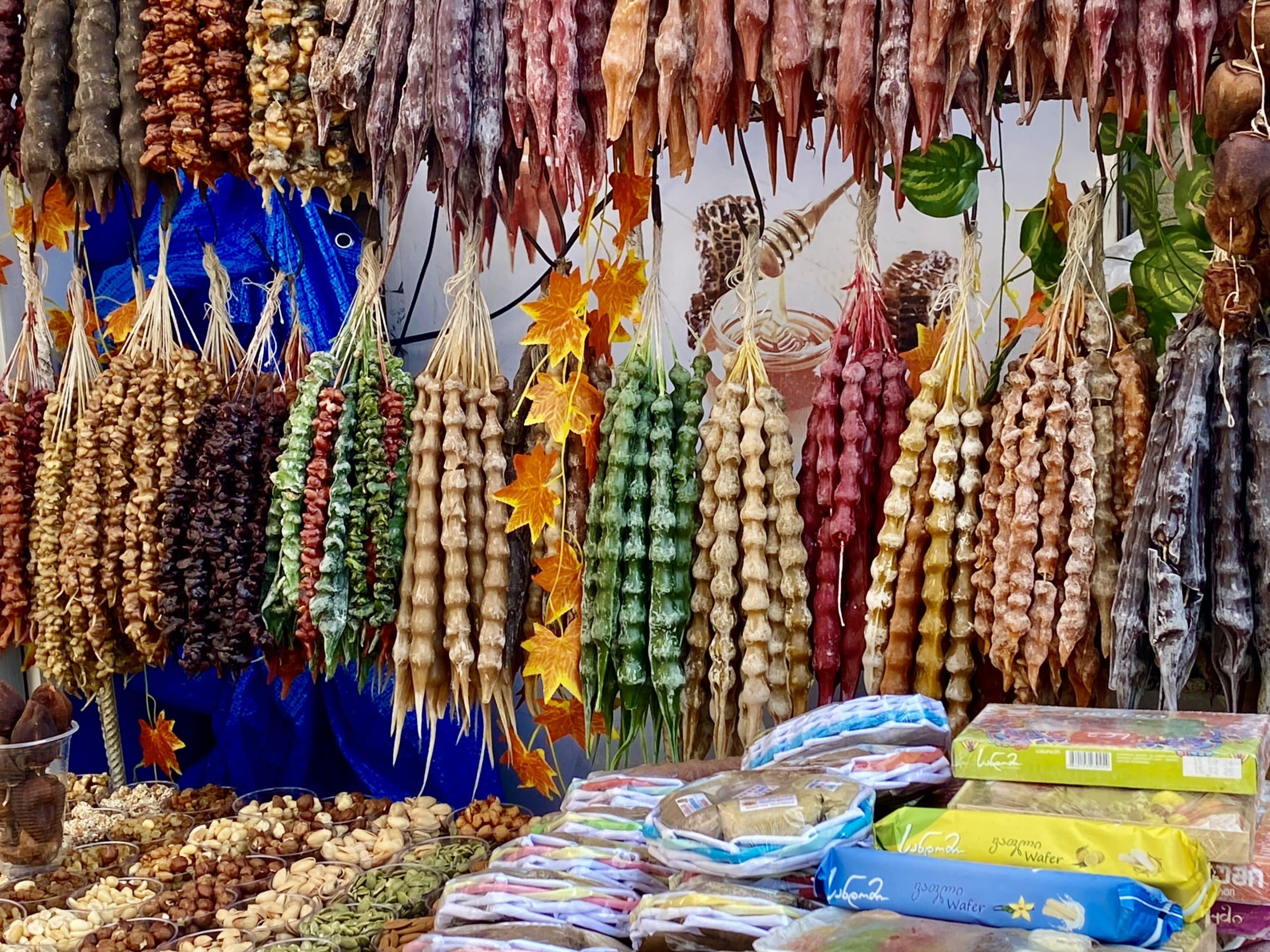
The colorful strands of dried fruit were particularly interesting and looked like shiny wax candles. These are called churchkhela, and the string of fruit or nuts is covered with a boiled and stirred syrup made from crushed grape or other fruit juice blended with flour. The syrup acquires its rich color from the fruit juice. These eye-catching, shiny sweet cylinders are Georgia’s national sweet and can be found throughout Georgia at open-air or market stalls.

They also offer assorted fresh fruit that is refreshing as one wanders along the streets and alleys.

THE SULFUR BATHHOUSES.
The Sulphur Bathhouses are known as the birthplace of Tbilisi because this was where the city originated in the 5th Century AD. They can be found in the Old City in the AbanoTubani district, which is where the the thermal water is harnessed for the baths. There is no mistaking them because of the strong smell of sulfur. There are about 12 bathhouses that have survived from a much larger number that existed a long time ago.
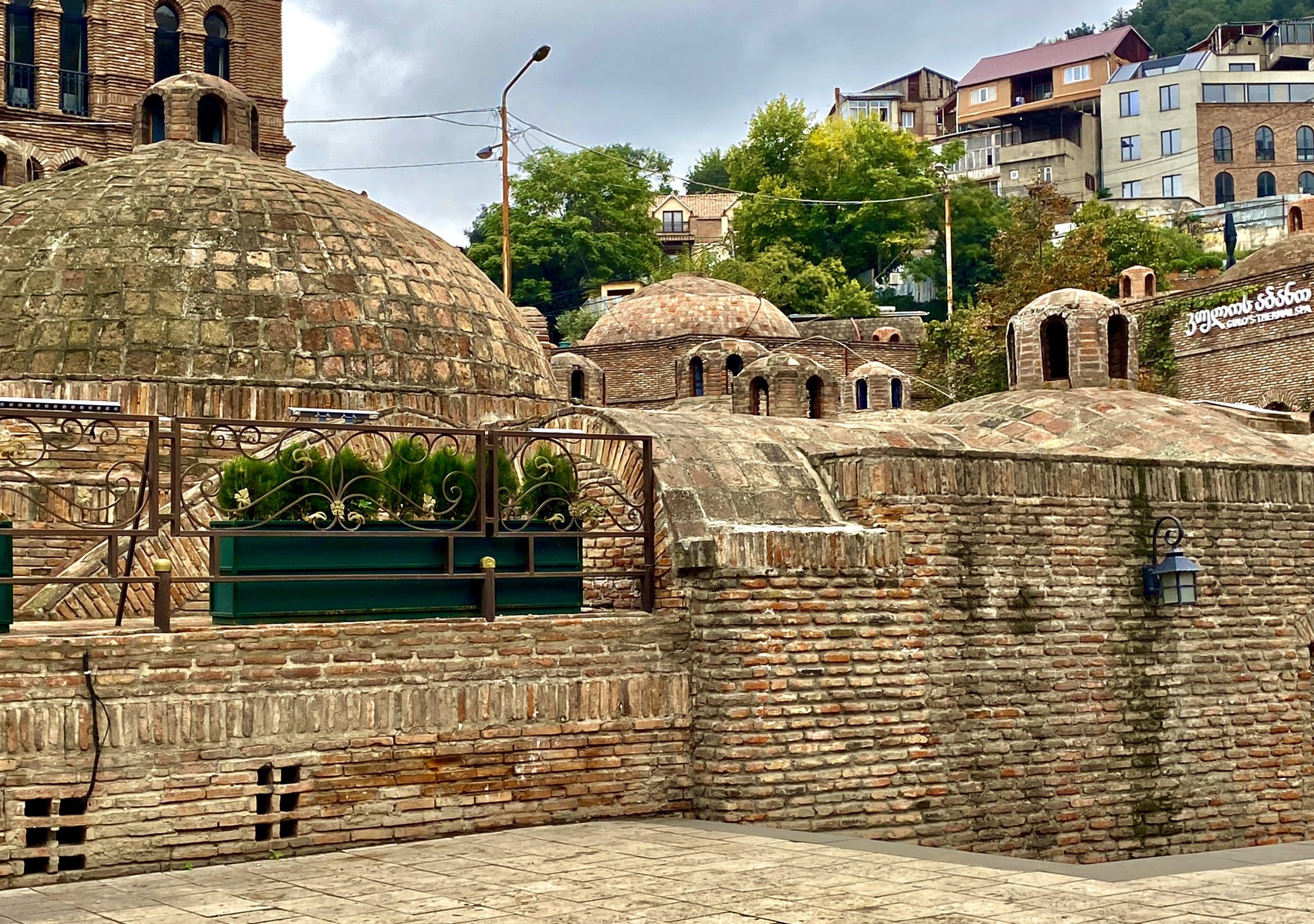
The water is naturally warm, about 100 – 104 degrees Fahrenheit. The hot springs for the baths are underground and covered with domes, and they are known for their healing powers. After immersing yourself in the mineral waters, make an appointment for a “kisi,” which is a custom brushing, like an exfoliation, with a brush that leaves your skin soft as a baby’s tush—if you can endure the punishment of the brushing, that is!
KACHAKURI AND KHINKALI
No meal is complete without Khachapuri and Khinkali, both essential traditional foods. Any number of variations are served, with slightly regional differences in the recipes, but essentially they all look and taste similar.
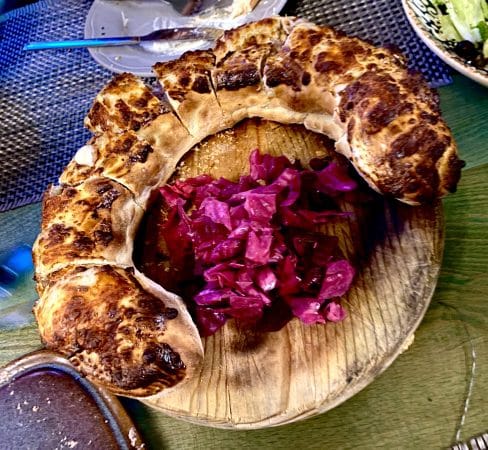
Khachapuri is a round or boat-shaped flatbread with a cheese filling. There are regional variations of this bread, but it is basically a yeast pastry with a salumi cheese filling cut into pie-shaped portions. It is served irresistibly warm.
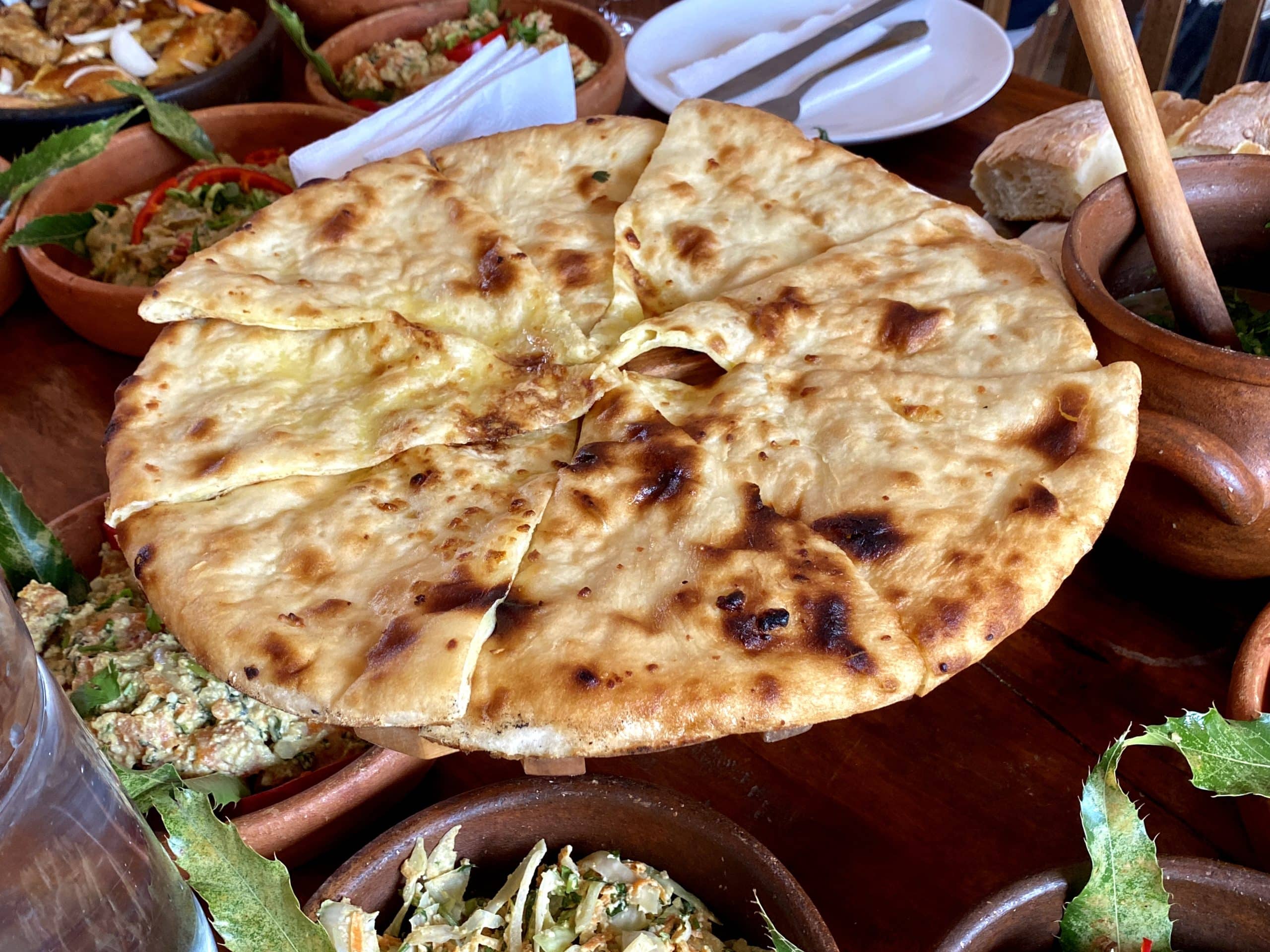
This is the traditional shape of khachapuri, cut into portions. When diners sit down, they immediately grab a slice!

This was a square version baked outdoors and served at a barbeque. Like all barbeque food, it was “brushed” by the flames, giving it a slightly charred flavor.

Although the boat-shaped khachapuri is served less frequently, it does appear regularly at a “supra” dinner. The pastry is the same, shaped into a boat form and filled with cheese. While still warm, an egg and two generous pats of butter are added to the cheese filling and blended in by hand at the table, making it a richer version of the original recipe.
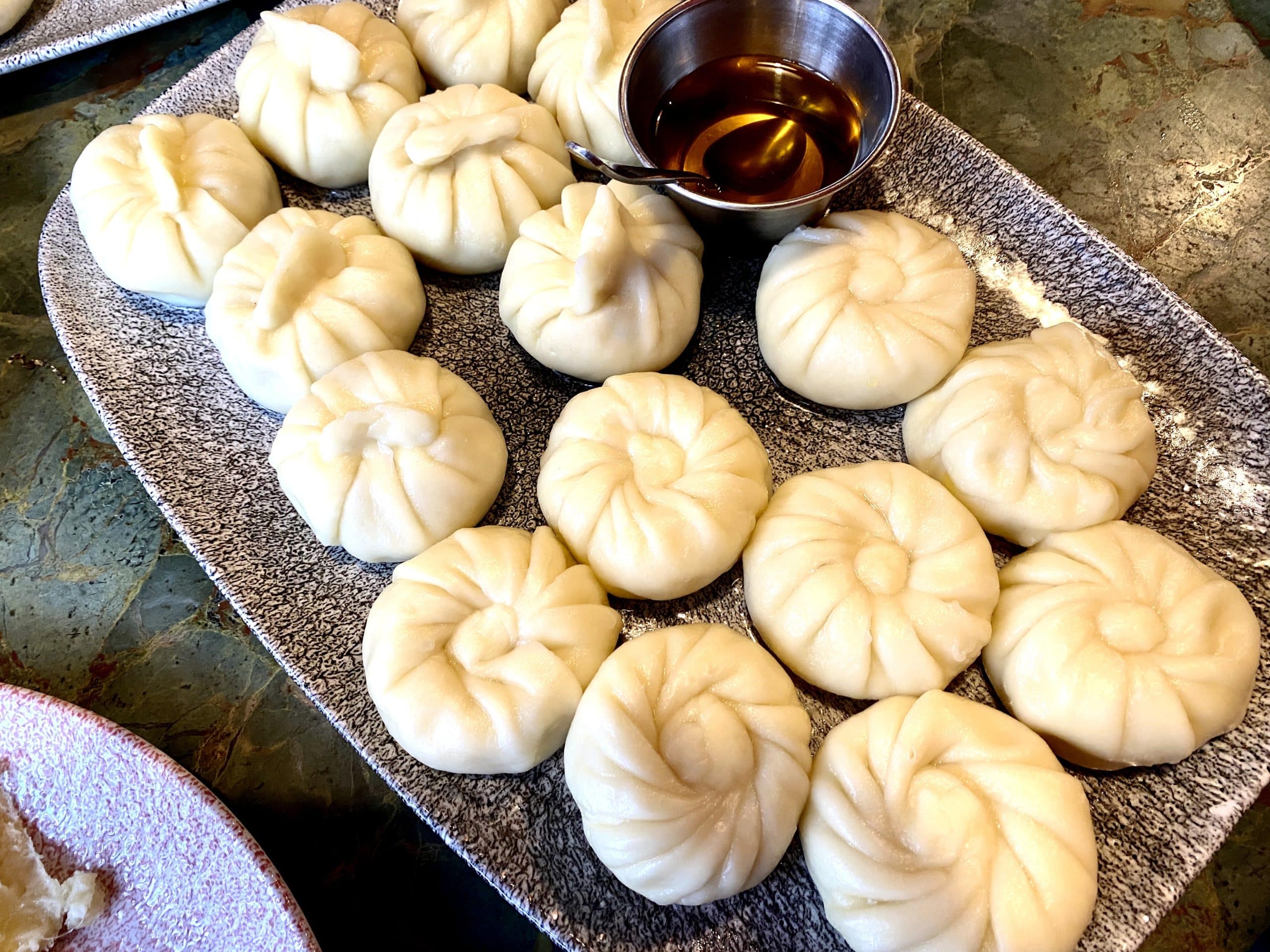
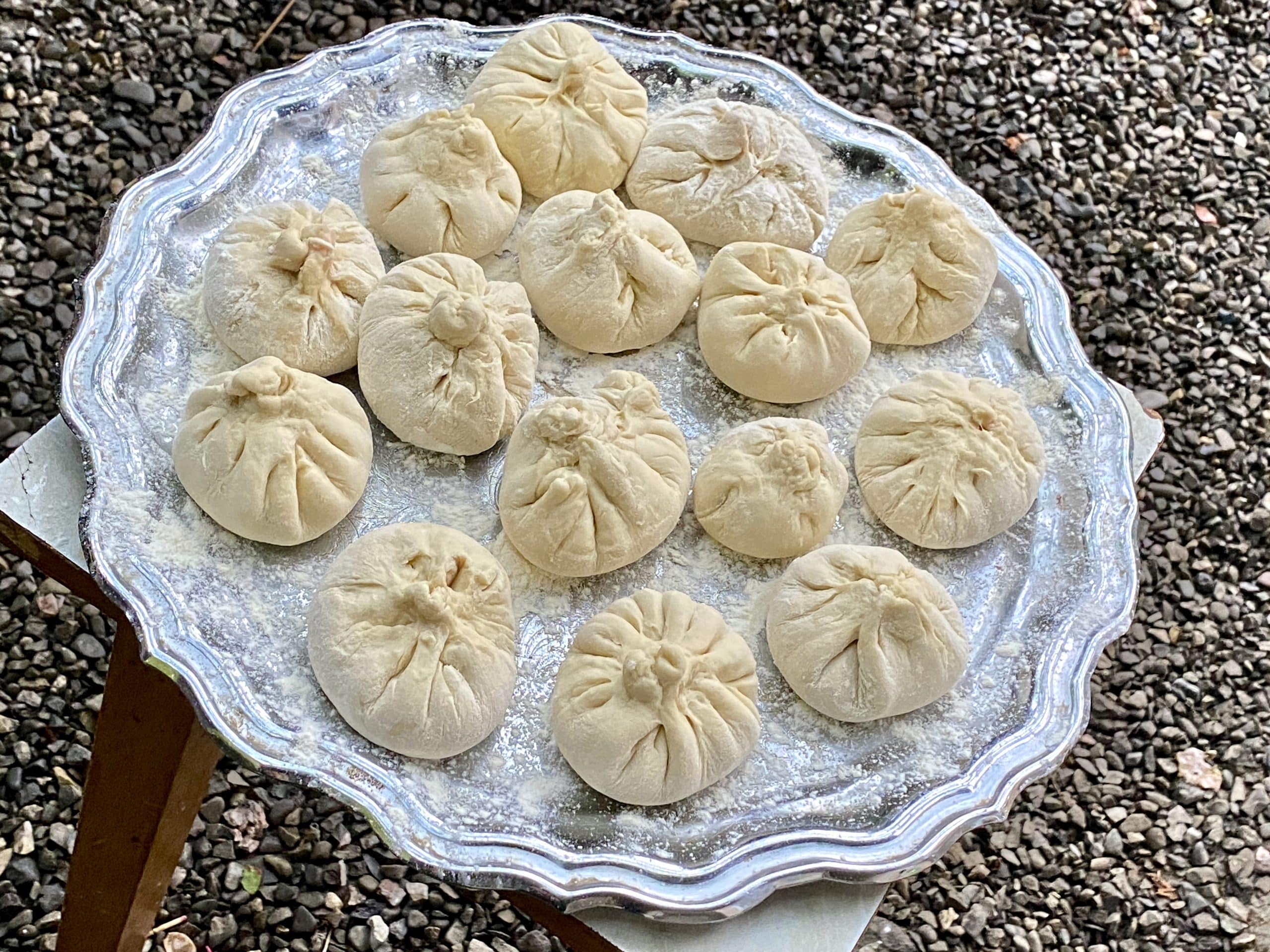
Khinkali are little pockets of dough filled with well-seasoned meat and delicious gravy—sometimes mushrooms or other vegetables. They are boiled or steamed and arrive at the table piping hot, accompanied by a gravy boat with melted butter for an extra few calories.

Making khinkali is the art of learning to pleat the dough into the knot that is the traditional shape. There is also an art in eating khinkali! Tsotne, our guide educated us in the correct khinkali etiquette! Take the khinkali, turn it flat side up, take a small bite, and “vacuum” some gravy into your mouth so that when you turn it right side up again, you do not leave a trail of gravy all over the table and your clothes!

GRAFFITI
The graffiti is engaging with large depictions covering the walls of abandoned soviet era buildings and smaller illustrations in neighborhoods that are being revived. I was not in Tbilisi long enough to do a graffiti tour, but what I did see was of a very high standard, and I would have loved to learn more about the meaning of the graffiti.
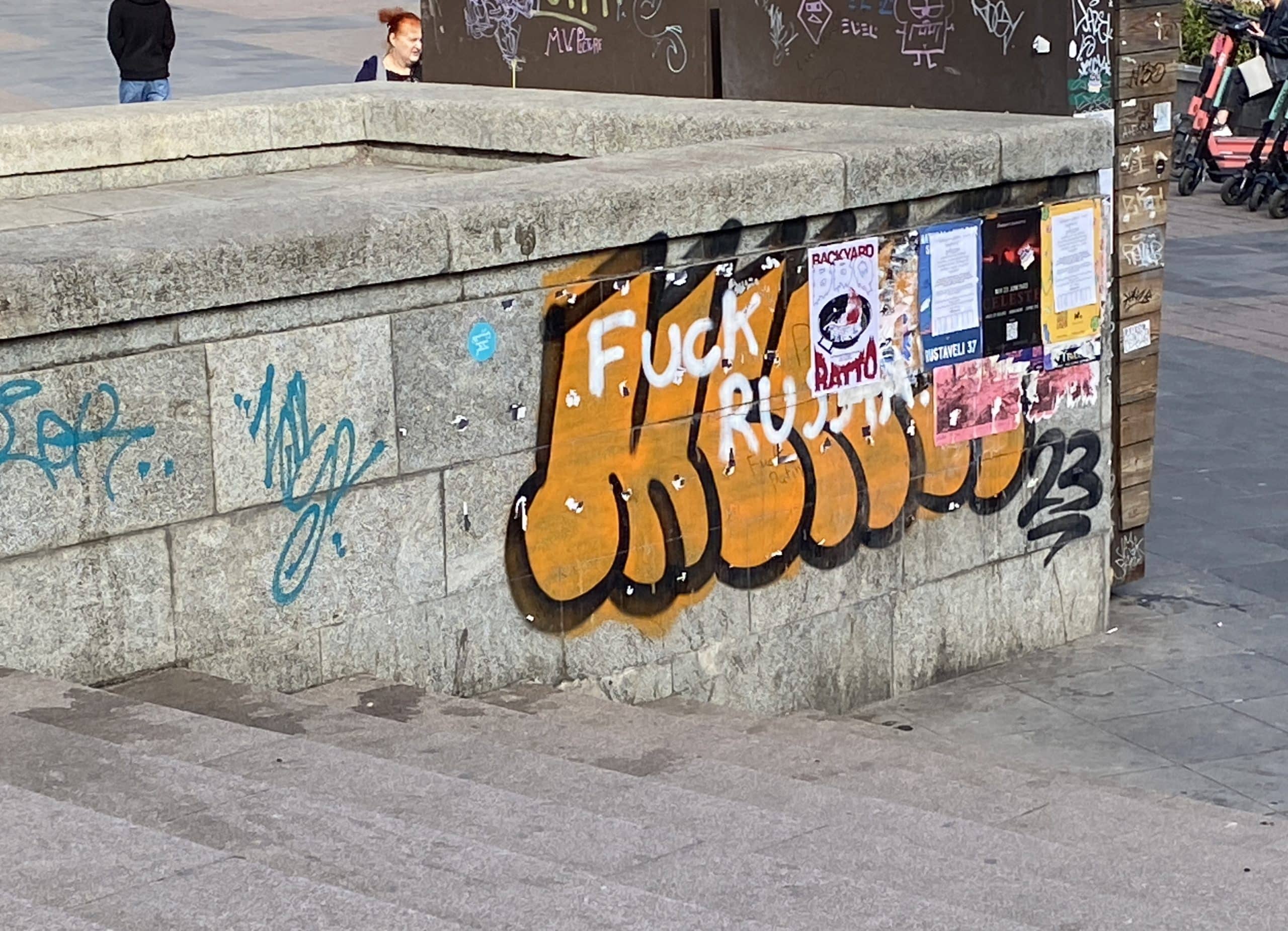
Undoubtedly a lot of it has political overtones aimed at the Russians. There is nothing obscure about “**** Russia,” and I saw these two words repeated several times while walking around Tbilisi.
THE SOVIET SHADOW
There’s a long history of Russian–Georgian conflict, with Russia eyeing Georgia as its prize, while the Georgians prefer to look to Europe and hope one day to be part of the EU and to shake off the Soviet shadow. Even today, the Russians “possess” twenty percent of choice Georgian land that they held onto when they left after the Russian-Georgian War in 2008, and the possibility of it being returned to its rightful owner is zero to nil.
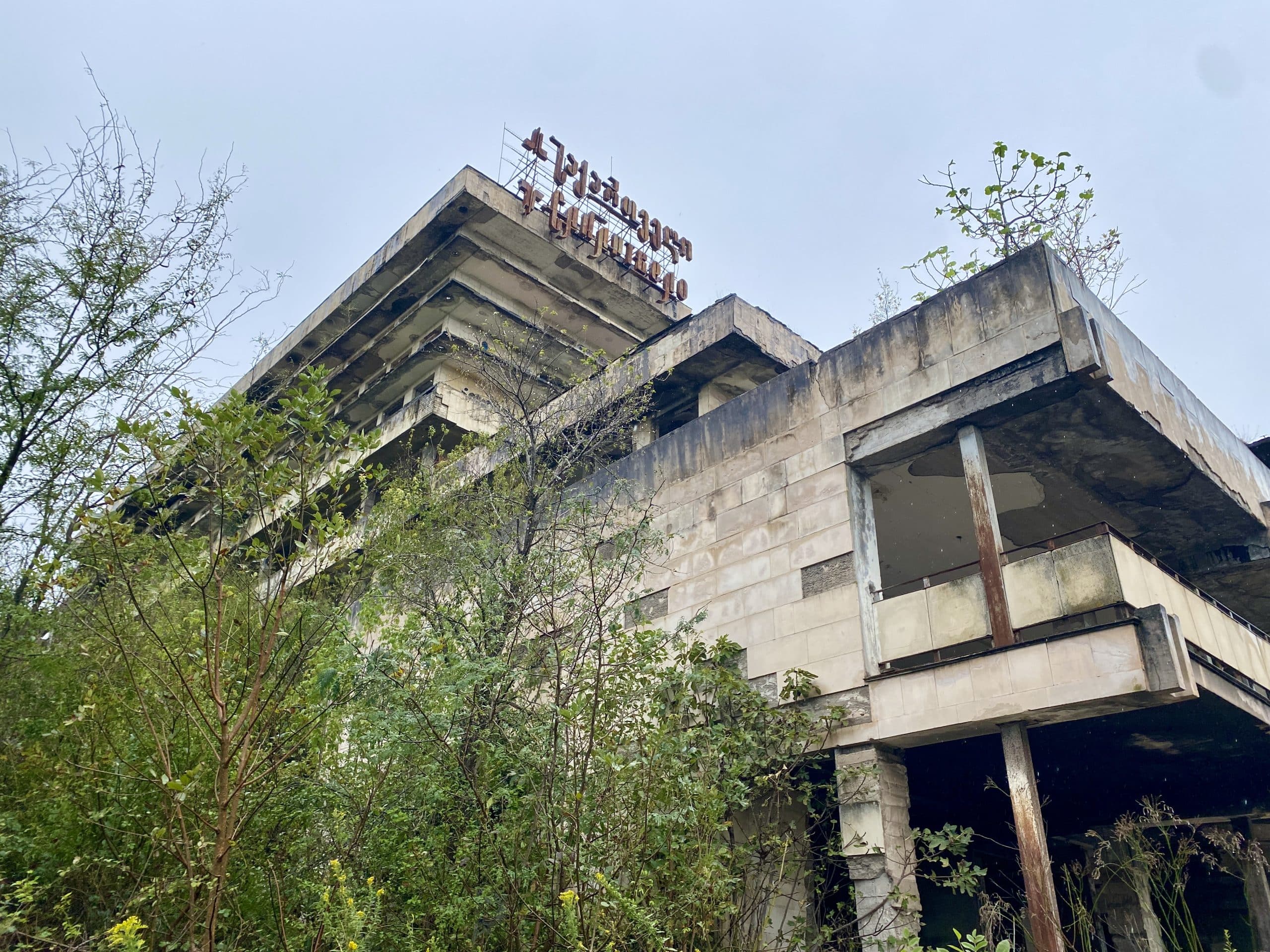
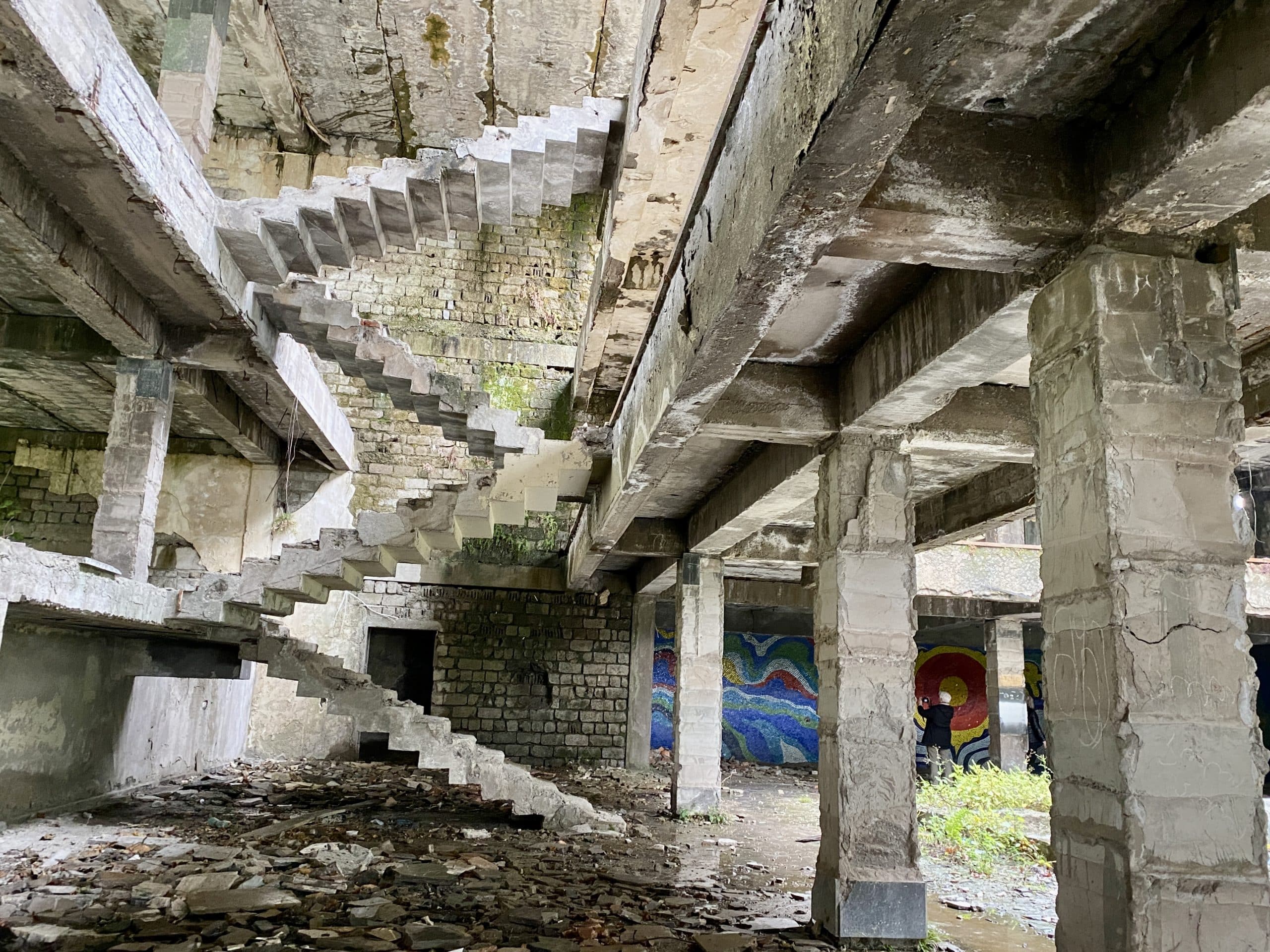
During their occupation, the Russians built several buildings throughout Georgia that were abandoned when they left. We visited a number of these while touring with Focused Escapes
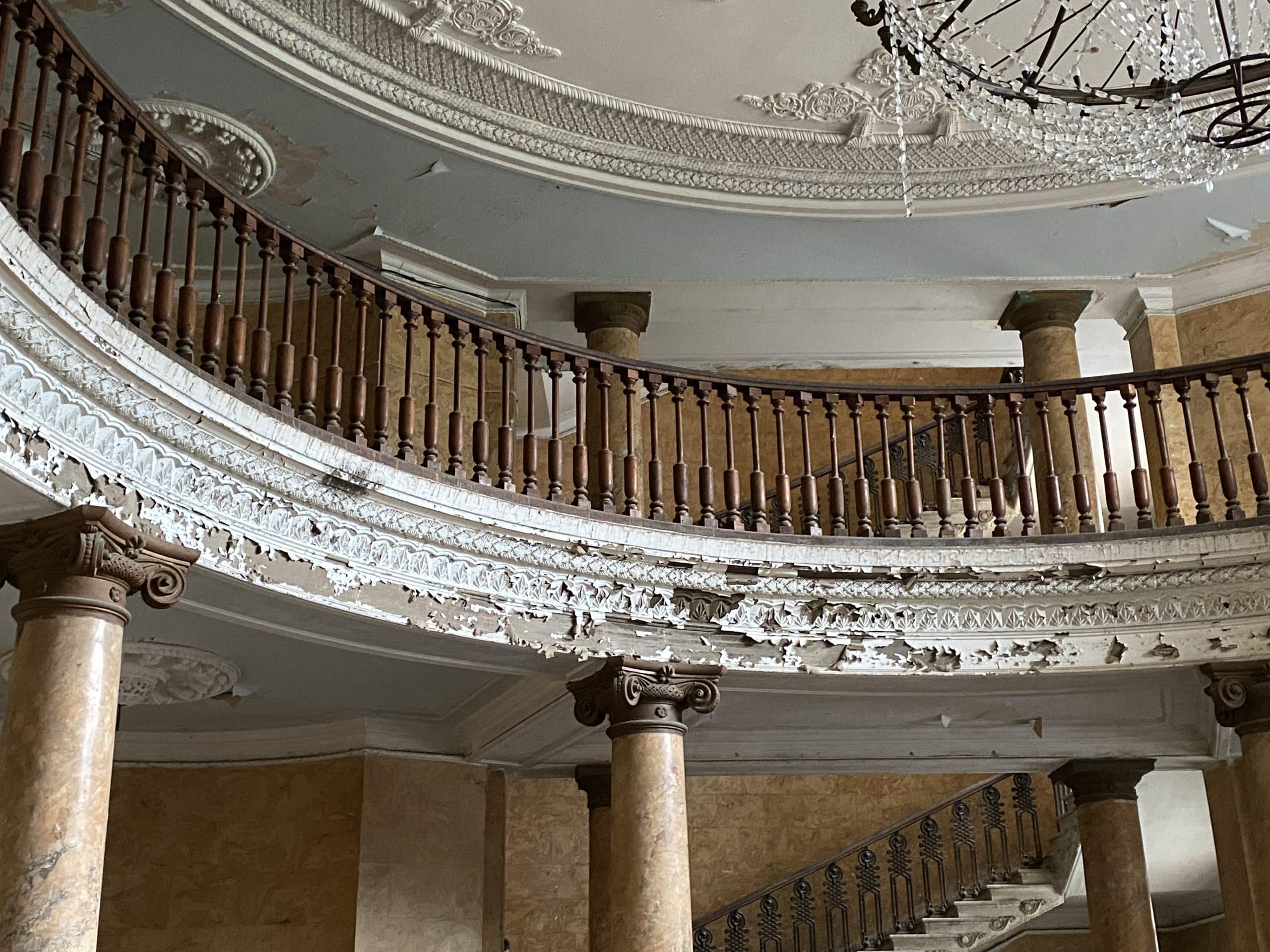
Some were only the framework, but others were designated Sanitariums, which were promised to be elaborately finished with fine marble and decorative work on the walls. Seeing how dilapidated they are now, falling to pieces, presents an extravagant and wasteful picture of the Soviets.
There is a lot of abandoned Soviet Brutalist architecture, huge, hulking shells of buildings discolored by the elements, with trees now growing through them.
In the last few years, efforts have been made to refurbish several of these abandoned buildings, which have, in turn, led to the refurbishment of entire neighborhoods as these “adaptive re-use of space” projects were completed.

REFURBISHED BUILDING.
The main reason I wanted to visit Georgia, was to see these refurbished buildings in Tbilisi, especially the buildings from the Soviet era, that have been restored. These “adaptive reuse of space” projects have been featured in international design and lifestyle magazines.
The best-known are:
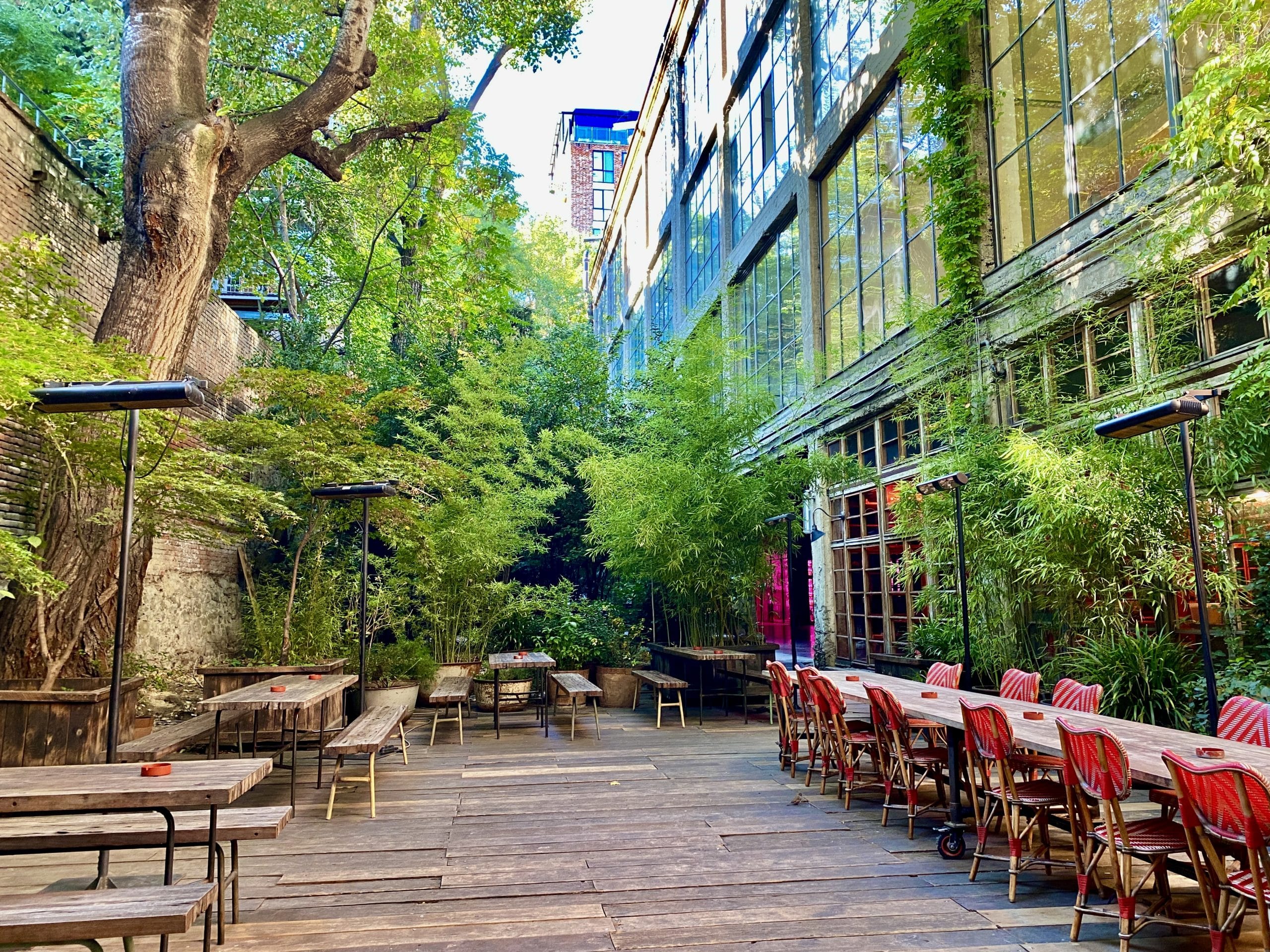
Stampe Hotel

Rooms Hotel
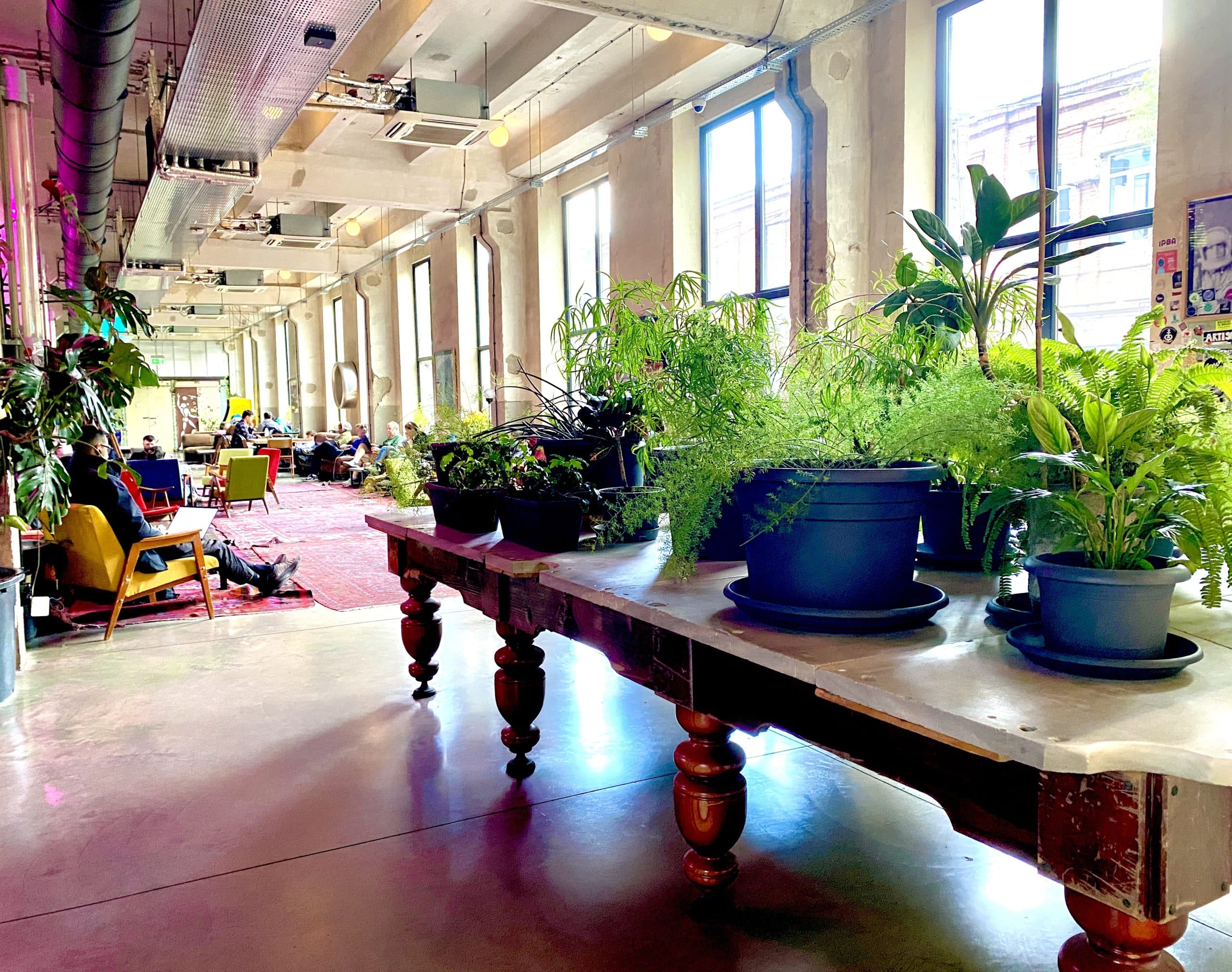
Fabrika Hostel
refurbished by the Adjare Group. Beginning in 2012 with two employees, they now employ 2,500 people and have done wonders, putting Georgia on the international tourist map and creating employment in the country.
Communal Hotels
is a newer group, and they are forging ahead in restoring buildings for boutique hotels with a strong focus on restaurants throughout Georgia.
Heritage Homes
is another, and they are converting smaller buildings into boutique hotels with restaurants.
It is these restored buildings that triggered the resurgence of tourism in Georgia, and when we returned from our 9-day tour, I made sure to see some of the developments and find out more about them. This, too, is a subject on its own, and if I manage to stay focused and not let life interfere with my best intentions, then I will write in more detail about these unique refurbishments.

CONCLUSION.
Did I have any idea how interesting this journey to Georgia would be? Not at all!
Presently, tourism in Georgia is flying under the radar, especially for Americans who seem to fear the closeness of the Russian border to Georgia, as well as Russian Interference in Georgia’s politics. However, there are many reasons for making a trip to Georgia, including the fact that it is less expensive than Western Europe. Having visited Georgia and seen its beauty and value, I believe that within three years, it will be “overtourismed”by which time word will be out just how spectacular it is.
Focused Escapes
was the tour group I joined during my visit to Georgia. They collaborate with teams on the ground that provide unique experiences.
The Tbilisi City Guide by Wander-Lush
is the most informative book on Georgia, and I highly recommend you read it before and during your trip if you travel to Georgia. This is an online publication packed full of information and is constantly being updated. You can refer to it as you travel.
This blog post was intended to be a few short paragraphs, but I got carried away. Now that I remember this is a post, not a book, I will add the rest of the paragraphs later!
What a trip, Phyl. As you noted, who knew….? It looks amazing and fascinating. It’s on the bucket list.
Brilliantly written! Great explanations, we really did a lot on this trip.
Thank you Phyl!
Vicki,
Thanks for that wonderful comment!
Georgia was one of my best travel experiences. Focused Escapes gave us an excellent tour, well organised and extremely interesting. I will gladly sign up for one of their tours again.
Phyl.
Jo,
It was amazing and fascinating, as you commented and I know you and Stanis would love it, especially the Soviet Brutalist architecture — how these hulking, abandoned buildings are being refubished and put back into “circulation”. Also, good hiking trails, and cycling!
Phyl.
Wonderful! I want to go now too! Thanks for sharing your experience. 🥰
Heather,
It was so worth it, one of my best travel experiences and I kmow you will love it.
Phyl.
Jo,
It was amazing and fascinating, as you commented and I know you and Stanis would love it, especially the Soviet Brutalist architecture — how these hulking, abandoned buildings are being refubished and put back into “circulation”. Also, good hiking trails, and cycling!
Phyl.
Great article Phyl- you really brought the experience to life! Now I want to go back!
Can I come with you?!
It was a phenomenal experience!